Varar Engang, Der/Once upon a Time (1922)

Standard

Director: Carl Theodor Dreyer. Sophus Madsen Film.

SILENT

Producer: Sophus Madsen. Writer: Palle Rosenkrant, Carl Theodor Dreyer. Camera: George Schneevoigt. Sets: Jens G. Lind.

Clara Wieth, Svend Methling, Peter Jerndorff, Hakon Ahnfeldt-Ronne, Torben Meyer, Mohamed Archer, Henry Larsen, Lars Madsen.

SYNOPSIS

A spoilt Princess (Wieth) turns down all manner of suitors with a haughty impartiality that increasingly vexes her father the King (Jerndorff). When she turns away the Prince of Denmark (Methling), the Prince decides to trick her into falling in love with him by disguising himself as a poor but romantic farmer. Through accident and circumstance, they are thrown together, but not before he teaches her a lesson in respect.

REVIEW

Thought lost for many years, this early, light comedy from Dreyer (later the master of deep, moody and contemplative family drama) reveals to an audience why it chose to hide itself for so long, rather than giving us any insights as to the development of its director.

The full version of the film is now well beyond our reach, now it is merely a patchwork effort cobbled together from fragmented stills, publicity shots, title cards and the remnants of the old film stock. Dreyer was reportedly unhappy with the finished product all his life, lamenting that this was an experiment in focusing on atmosphere above character that showed him never to try it again. These are feelings this reviewer shares, for the whole is indeed disappointing, uneven and hamfisted.

Story wise, we are dealing with a fairytale that quickly takes a turn around a dark corner. It is similar in some respects to Shakespeare’s The Taming of the Shrew and with all of the duplicitous dressing up, just as aggravating. Dreyer throws in a lot to what is essentially quite simple fare; it doesn’t help us in the modern age that segments are missing and the film’s various loose ends soon knot the film into an incoherent mess that sucks the life out of your attention span.

There are some tasty matters. The Princess’ capriciousness is deadly – faced with pearls or poetry from the dashing gallants in want of her hand, she condemns them all to death. Later on, after she herself is expelled from the castle to scratch out a life in a hovel, she sees a real man hanging from a tree. The Prince, whilst in self-imposed exile in the forest licking his wounds, is visited by a mystical peddler who offers him a magic kettle with which he can see his future wife. No crystal balls in this fairytale kingdom – functionality and clairvoyance are conveniently intertwined. The performances are amusing; Wieth and Jerndorff in particular have huge fun.

One thing that is readily apparent – big kroner was lavished on the sets and beautiful costumes (even if, on closer inspection, they are contrived from a few different periods).
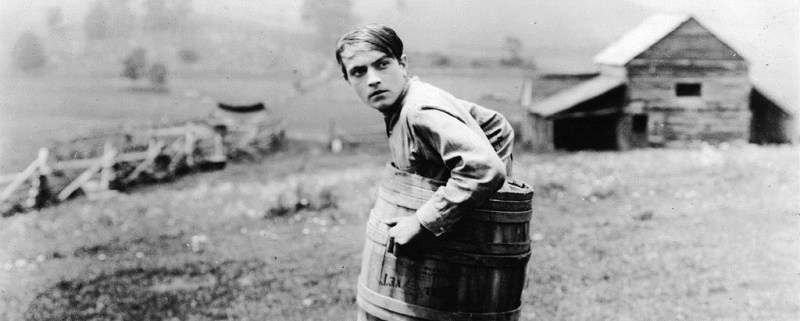

Tol’able David (1921)

Standard

Film review by Jason Day of the silent drama starring Richard Barthelmess. Directed by Henry King.

Director: Henry King. Inspiration Pictures/First National

SILENT


Continue reading

Oscar winners 2012 – full list

Standard

This was the big one of course – a few surprises (a film with no dialogue wins best original screenplay) and a few not so surprising (Meryl Streep finally grabbing her elusive third award). Full list is here.

The Scarlet Letter (1926). Stunning, beautiful silent film based on Nathaniel Hawthorne’s novel

image lillian gish lars hanson scarlet letter
Standard

Film review by Jason Day of the silent movie adaptation of Nathaniel Hawthorne’s novel The Scarlet Letter about an adulteress woman in a puritan community. Starring Lillian Gish.

Silent


Continue reading

Extremely Loud & Incredibly Close (2011)

Standard

Director: Stephen Daldry.

Paramount/Scott Rudin/Warner Bros.

DRAMA

Producer: Scott Rudin. Writer: Eric Roth. Camera: Chris Menges. Music: Alexandre Desplat. Sets: K.K. Barrett.

Tom Hanks, Sandra Bullock, Thomas Horn, Zoe Caldwell, Max von Sydow, Viola Davis, John Goodman, Jeffrey Wright, Hazelle Goodman.

SYNOPSIS

Young Oskar (Horn) lives in a close and loving household with his parents and Grandmother. His idyllic life is shattered however when his father (Hanks) is killed in one of the World Trade Center towers on 9/11. He is bereft but chances upon a key hidden amongst his father’s effects and sets about locating the lock that it fits into.

REVIEW

Daldry is the deft hand behind gentle film’s that have a seam of steel running through them, such as Billy Elliott (working class British boy learns ballet), The Hours (portmanteau period lesbian drama) and The Reader (love story between a teenager and an older woman, who used to supervise in a Nazi death camp). Right choice he was then to direct this odd piece.

9/11 has provided artistic inspiration for a number of playwrights, novelists and filmmakers this past decade. On film, this includes work as diverse as Michael Moore’s incendiary documentary Fahrenheit 9/11, Oliver Stone’s Nicholas Cage starring World Trade Center and the acclaimed made-for-television docu-drama Flight 93.

Based on the novel by Jonathan Safran Foer, this weepy drama takes a less conventional route, mixing the whimsical adventure of a young boy with Asperger’s syndrome with the emotional fall-out of a disaster. At least Foer was brave to go off on a unique tangent, but it creates very unwelcome feelings in the viewer. Using 9/11 as the springboard for this wish fulfilment yarn seems ghoulish, irresponsible, meretricious. The recurring visual motif of Hanks free-falling for eternity as his son imagines him bravely leaping from the crumbling sky scraper doesn’t help ease the mind.

Neither do some very disturbing aspects of Oskar’s parents that would ring alarm bells with even the most useless social worker, as both seem content to let him wonder off alone around New York, foraging with the homeless or calling on strangers in their homes (“Didn’t you think I’d be raped or murdered?” he asks his mother. “Every hour of every day” is her incredible response).

When it tries to be a gut-wrenching weepy, the film works very well and there are quite a few moments that help get the tears flowing. The performances are striking in that they are stripped back to the very basics (von Sydow doesn’t even speak). Bullock is quietly impressive as Oskar’s mother, slowly sinking into depression, looking and sounding as if her very soul has been sucked out of her. Von Sydow snags an Oscar nomination for that wordless but infinitely expressive performance as Oskar’s mute grandfather. Even the normally carousing Goodman is reduced to trading insults with Oskar in a passive, monotonous tone as if he, like everyone and everything else, is automatically diminished by the events on that day.

The film belongs to Horn though, who is a remarkable find as Oskar and he brings the film to life with a nervous, twitchy energy perfectly in keeping with the bizarre path the narrative takes.

The Thief of Baghdad (1924)

Standard

Director: Raul Walsh. United Artists.

SILENT


Producer: Douglas Fairbanks. Writer: Elton Thomas, Lotta Woods. Camera: Arthur Edeson. Music: Gaylord Carter. Sets: William Cameron Menzies. Special Effects: Hampton Del Ruth.

Douglas Fairbanks, Snitz Edwards, Charles Belcher, Julanne Johnston, Sojin, Anna May Wong, Brandon Hurst, Tote Du Crow, Noble Johnson.

SYNOPSIS

Ahmed (Fairbanks) is the Prince of all Thieves in ancient Arabia, a young man who “takes what he wants” when he wants it. That is until he meets the ravishing Princess (Johnston) and decides to abandon his career, temporarily at least, in order to woo her. But he has first to complete many dangerous tasks to win her hand, as an evil Mongol Prince (Sojin) is after her too.

REVIEW

The great granddaddy of all Arabian Nights fantasy films is still thrilling, fun, rousing entertainment nearly 100 years after its premiere.

Early cinema swashbuckler Fairbanks, the dash good-looking, athletic movie legend, husband of Mary Pickford, was at the peak of his Hollywood powers so was obvious casting in the role of the Prince of Middle Eastern kleptomaniacs, a one man crime wave for whom the ASBO couldn’t have been invented quickly enough. This is his most fondly remembered film in a career that saw him play  Robin Hood and The Man in the Iron Mask and Zorro. As an example of the ‘Star System’ that operated in Hollywood at this time (where movie roles were moulded around the personality, or at least their public personality, of the star who was playing them), so the film is tailor made for Doug’s brand of bouncy gymnastic gyrations and boyish, carefree good larks.

If Johnston’s insipid turn as the Princess ultimately proves irritating, this was probably more because of the convention for female leads in Hollywood action films of the silent era to swoon and pale into insignificance next to their macho co-star. At least we have a smashing, exotic support cast: Wong excels as the Johnston’s duplicitous Mongol maid and the mysteriously named Sijon is a creepy villain in the Nosferatu vein.

Its influence also stretches across the decades, due in most part to Menzies’ astonishing Baghdad design, a unique ‘Arabopolis’ with towering minarets, art deco furnishings and a grandly synthetic beauty (the undulating fabric that makes up the Midnight Sea prefigures a similar design used in Fellini’s Casanova). Anyone watching Disney’s vulgar, noisy version of Aladdin with gobby Robin Williams as Genie will also see the similarities. Menzies would go on to design many other famous films and this was an early indicator of his extravagant style.

Made back in the day, long before CGI and computers, some of the ingenious special effects have managed to withstand the test of time. The flying carpet is still humorous and convincing and the trick photography in the Magic Crystal is impressive. Unfortunately, the winged horse and underwater sections (Doug’s walk toward the Mermaids’ Lair stinks) are rather less so and invoke some hilarity.

Despite this and the rather hefty running time (2 and a half hours no less), director Walsh manages to inject enough pace and verve to provide a film that still casts a shimmering light down the cinematic timeline.

Dorian Gray (2009)

Standard

Director: Oliver Parker

HORROR


Producer: Barnaby Thompson. Writer: Toby Finlay. Camera: Roger Pratt. Music: Charlie Mole. Sets: John Beard.

Colin Firth, Ben Barnes, Rachel Hurd-Wood, Rebecca Hall, Emilia Fox, Ben Chaplin, Fiona Shaw, Caroline Goodall, Maryam D’abo, Douglas Henshall, Jo Woodcock.

SYNOPSIS

Young and impressionable heir Dorian Gray (Barnes) returns to London and the large, mouldering house and fortune he has inherited. Instantly befriended by the older, decadent and wicked Lord Henry Wootton (Firth) and his artist friend Basil Hallward (Chaplin), he is soon plunged into a world of heavy drinking, opium taking, casual sex and late-night orgies.   Dorian makes an accidental Faustian pact to never grow old whilst always indulging in life’s pleasures, a deal captured in Hallward’s painting of him. But as Dorian enjoys the hedonistic pleasures of London and remains fresh faced and handsome, the image of him in the portrait slowly begins to age and decay, reflecting the moral rot of his character.

REVIEW

Playwright Oscar Wilde’s only novel, a classic of Victorian Gothic horror, has been filmed and staged many times over, even being made into a ballet. Here it is dusted off again and, despite the bustles, bodices and bowler hats on display, this time it is aimed squarely at a 21st century, hardcore clubbing audience in their twenties.

The film is now shorn of Wilde’s full title The Picture of Dorian Gray, presumably to focus attention even more tightly on the narcissistic main character. It also spotlights the awkwardness of playing him for the chosen actor.

Dorian Gray is a difficult role to fulfil. Described throughout Wilde’s book as having heart-stopping beauty, he is also a ruthlessly cruel, self-obsessed aesthete with irresistible charisma. The problem for most dramatists adapting the novel is that Dorian always ends up looking lovely whilst everyone else does the wit and schmoozing. Narnia’s Barnes gets the dubious honour of portraing the titular cad and promptly plays Dorian with all the conviction of a blindfolded catwalk model on roller-skates; unbalanced, directionless.

Predictably then it’s left to those in the other roles to bolster the film. Firth plays Lord Wooton with lip-smacking wit and frivolity. He had been the darling of British drawing room theatre and film long before he won his Oscar for The King’s Speech, playing heroic if slightly bland Englishmen of upstanding virtue (his little sister from TV’s Pride and Prejudice, Fox, even plays his wife here). It is a complete guilty pleasure to see him exercising his villainous muscles for once and helping to bring the script’s cutting witticisms to life.

Writer Finlay has scribbled a gamier, more licentious version of the book to keep it relevant to modern eyes, with a heavy emphasis on class A substances, binge drinking and hetero and homo-sex (the latter never being more than a subtle whisper in Wilde’s writing, for obvious reasons) but he still manages, as movie mogul Sam Goldwyn once cleverly put it, to “bring it bang up to date with some snappy 19th Century dialogue”. There is a musty, old fashioned feel to the drama despite the moral anachronisms.

Parker, a bit of a Wilde cinema expert after writing and directing acclaimed star-heavy versions of The Importance of Being Earnest and An Ideal Husband, is here reduced to the director’s chair only and it’s interesting to ponder how much swifter and smarter this fluffy piece might have been if he’d had more singular control. But what we are left with is a pretty, funny and engaging ornament that manages to cast a certain spell, rather like the lead character.

Male and Female (1919)

image still swanson lion male female
Standard

Film review by Jason Day of Cecil B. DeMille’s silent sex comedy Male & Female starring Thomas Meighan and Gloria Swanson.

Comedy


Continue reading

BAFTA (Film) 2012 – Full list of winners

Standard

I watched the ceremony last night in full. One good thing about BAFTA compared to Oscar is that they run a tight ship – a voyage lasting no longer than 2 hours, rather than being padded out for the sponsors and coming in at a whole night’s viewing. Click here for a link to BAFTA’s official site which lists the winners for all of the awards.

Carnage (2011)

Standard

Director: Roman Polanski.

SBS/Constantin/SPI/Canal+ et al

COMEDY

Producer: Said Ben Said. Writers: Yasmina Reza, Roman Polanski. Camera: Pawel Edelman. Music: Alexandre Desplat. Sets: Dean Tavoularis.

Jodie Foster, Kate Winslet, Christoph Waltz, John C. Reilly, Elvis Polanski, Eliot Berger.

SYNOPSIS

When their children are involved in a minor brawl that sees one of them injured, two professional, middle-class couples (Foster and Reilly; Winslet and Waltz) gather to discuss the possibility of the offending child apologising. The meeting soon descends into a farcical series of recriminations, revelations and neurotic breakdowns.

REVIEW

Polanski’s starry ‘tete a quartet’ is his adaptation of co-writer Reza’s play Le Dieu du carnage. But rather than “skewering middle class hypocrisies” as the publicity blurb would have it, he instead tickles them with a light slap on the wrist.

This is an awkward film to pull off successfully – a one set movie with only 4 protagonists arguing almost non-stop throughout was never going to be an easy sell to producers. Wisely, he keeps the running time to a minimum (just less than 1 hour 20 minutes) but it still feels a quarter of an hour too long. He and co-writer Reza still manage to set the action up admirably though and, barring the last few minutes when one feels they have been hit on the head enough times with smart and incisive observations and comments, they manage to sustain the pace and verve.

It helps from here on in that he has picked the very best actors to flesh out the prosperous, pretentious and pompous adults who fight like kids over their kids having a fight. Oscar-nominated Foster shines in the showier role as a sphincter-tightening control freak, a woman who espouses respect for others but forces her way of doing things on other people. She also revels in a grossly distorted view of events (“Their son is a threat to homeland security” she says, only half-joking). McGinley is magnificently boorish as her husband who reveals his disdain for her, his children and even a beloved hamster. Winslet is fast becoming a very great actress, as evidenced here not only her passive aggressiveness but also in her remarkable body language; coiled tighter than a watch spring, setting her character up to disgorge in spectacular fashion. Waltz is the quietest of the group, but his smug, gurning lawyer, forever attached to a mobile phone and ready with a cutting jibe.