Film review by Jason Day of the modern day silent movie about a silent film idol whose career is destroyed by sound cinema.
Silent



Film review by Jason Day of the modern day silent movie about a silent film idol whose career is destroyed by sound cinema.
Silent
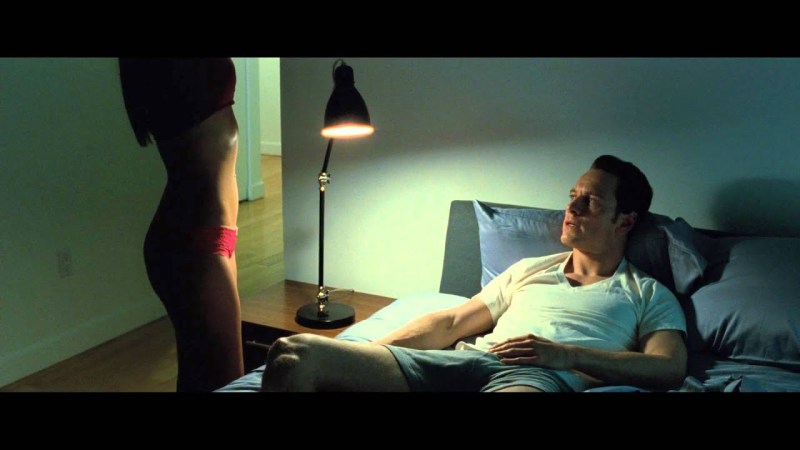
Director: Steve McQueen. Film 4/See-Saw/UK Film Council/Momentum/Lypsync/HanWay (18)
DRAMA

Producers: Iain Canning, Emile Sherman. Writers: Steve McQueen, Abi Morgan. Camera: Sean Bobbitt. Music: Harry Escott. Sets: Judy Becker.
Michael Fassbender, Carey Mulligan, James Badge Dale, Nicole Beharie, Elizabeth Masucci, Alex Manette, Hannah Ware, Rachel Farrar.
SYNOPSIS
The carefully cutlivated private life of Brandon Sullivan (Fassbender) allows him to indulge his sex addiction – whether with prostitutes or girls he meets in bars or when out and about. This is disrupted when his sister Sissy (Mulligan) arrives, unannounced, for an indefinite stay.
REV IEW
Michael Fassbender has a big dick.
Phew! OK, now that the ‘shock and awe’ announcement is over, let me get down to chattering on like I always do about a film that is quite moving – if, by moving, you mean glacial movement. For Shame is a cold, distant movie that you wouldn’t want to run your fingers over. But don’t worry, I’ll say a bit more about that penis later, for on that there is evidently much to discuss.
A film about a sexual obsessive on self-destruct whose damaged, needy sister moves in was never going to be a barrel of laughs. This is indeed intense, almost nihilistic cinema, but rewarding, if only for the committed performances and an assured, smart hand behind the camera.
This is only McQueen’s second full-length motion picture as director, but you’d think he was as much of a pro as the hookers Brandon hires. The first film (which, incidentally, snagged many international film awards) also starred Fassbender and was an equally stark, stripped down film. This was Hunger, in which Fassbender led a hunger strike at a Northern Irish prison. Here though, McQueen swaps the empty, plain interiors of a jail for the white, grey and silver minimalism of the post-Yuppy New York professional. But now the core of the story is not denial of a basic human need, but over-consumption on it.
McQueen shows considerable balls; this is fruity subject matter, but the result is most definitely not sexy. Despite the oodles of humping on display, this is neither erotic nor pornographic. McQueen’s film inhabits a strange, libidinous hinterland where penetration of the flesh does not lead to arousal in the cinema patron, nee voyeur.
But credit where it’s due, he is a bold film-maker, not afraid to show in almost genital detail with his camera the slow moral decline his lead character is undergoing. Fassbender has sex with a girl his friend had tried (and failed) to pick up in a bar, banging her unceremoniously against a wall, directly above which the word ‘Fuck’ is graffited. Surveying the mess Sissy has made of his front room when she first arrives, he picks up her woolen scarf with a baseball bat, the phallic shaft penetrating through the material that then slips down it.
From a gay man’s point of view, it could be that the most important and longest scene, in which Brandon has a near breakdown and roams about town trying to pick up anything, seeing him finally relying on a man in an underground gay sex bar, is degrading, almost homophobic. But this point could also be viewed as the zenith of a man’s night long sexual crusade through NYC, in which all in his path are conquests.
Fassbender is the cinematic man of the moment, with an already mightily impressive CV to his credit (X-Men: First Class, Jane Eyre. Haywire is also in cinemas at the moment and the ‘David Cronenberg takes on Freud and Jung’ drama A Dangerous Method is slated for release soon) so perhaps it’s not surprising he looks a little peeky, upstairs if not down. It’s a difficult performance to nail; on the one hand, you would be forgiven for thinking this is the ultimate Hollywood A-lister’s wet dream. He gets to have sex on screen with lots of attractive women as a character who is professionally and financially successful, feted and looked up to (at least by other men). But for exactly the same reasons, the character is also dangerous, empty and emotionally bereft. That he is a vastly more talented actor than anyone else you will find at the multiplex means he traverses this emotional tightrope with gingerly skill. Rather than essaying a person who feels nothing, Brandon has subtle shading, particularly when dealing with his troublesome sister.
McQueen gives Mulligan as frank a first scene as any actress could get in cinema and one that leaves us in no doubt she and her brother are two troubled souls with a shared past, very possibly being involved in an abusive relationship. Mulligan is a talented actress, used to playing put-uppon innocents, but thereafter she fails to ignite properly. She’s hampered by an extended singing scene (she is a bar artiste) that jars the flow of the film (McQueen should have shortened this, it really is excruciating) and an ocean-jumping accent that puts Kelly Osbourne in the shade (English actresses take note: emphasising your ‘R’s’ does not a stateside voice make).
And you thought I wouldn’t mention that penis again…oy veh! It really is big.

Director: G.W. Pabst. Sofar Film
SILENT

Producers: Romain Pines, Michael Salkind. Writer: Willy Haas. Camera: Robert Lach, Curt Oertel, Guido Seeber. Sets: Otto Erdmann, Hans Sohnle.
Werner Krauss, Asta Nielsen, Greta Garbo, Einar Hanson, Valeska Gert, Jaro Furth, Agnes Esterhazy, Loni Nest, Egon Stirner.
SYNOPSIS
Set in Vienna during the immediate aftermath of WWI and with the country suffering the effects of hyperinflation, this drama looks at the interactions between several citizens, including avaricious butcher Krauss, poor girl Nielsen and middle-class Garbo, who contemplates prostitution when her father Furth loses the family life-savings on a dodgy share tip.
REVIEW
Based on the novel by Hugo Bettauer, this film is now chiefly memorable for being Garbo’s second full length motion picture and her final film in Europe before Hollywood superstardom and immortality.
It is difficult to see, at least in the truncated American reissue of 1935, which hacks off almost the entire sub-plot of the film involving Nielsen, exactly what else makes the film worth watching. MGM bosses reasoned home audiences would be intrigued to see what their idol looked like 10 years previous so rushed this out in the same year she played Anna Karenina.
This reviewer had the dubious ‘pleasure’ of seeing only the much shorter version that, at least until recently, was still shown in America as director Pabst’s final cut of the production. But for patient audiences, even this abridged ad absurdum film merits attention.
Firstly, Pabst is excellently served by a dream silent era cast. Krauss (the title role in the influential The Cabinet of Dr Caligari) revels in the type of viciously uncaring, dominating male that he could be found inhabiting at this time. In the longer version, he demands a pound of flesh from Garbo for every pound of meat he gives her. In what we see here, his moustache stroking and leering glances are expressed with lascivious glee.
Suspension of disbelief is stretched to the limit in casting Nielsen (then 44) as a middle-aged couple’s daughter, but here she exudes sympathy and it is easy to see, even in her brief moments, why she was hailed as the greatest tragedienne since Sarah Bernhardt. Her screen career was all but over and this is one of the last movies she appeared in, but her work prior to this had even included playing Hamlet.
Gert amuses in a small role as a saucy, shrew faced sales girl who caresses her face with the furt coat she will sell Garbo.
But it’s all eyes on the greater Greta. Aged 19, she is captured in adoring close-up by Seeber and elicits a devestating, soulful intensity, the sort of world-weariness that would mark out her future American performances. Her converyance of angst and desperation is astonishing, for any actress of this period let alone a relative newcomer and is difficult to find comparison – Lillian Gish is similar, but there is less hysteria here. Garbo needs only the slightest expression to show an ocean’s depth of feeling.
The plot sadly unravels and there are silly moments that creep in. Garbo becomes a cabaret girl, but her dancing makes her the least sexy jazz age flapper. Hanson appears as an American soldier to sweep her off her feet in a happy ending that, after Pabst’s grim ‘New Objectivity’ realism, concludes the film on a saccharine note.
Pabst would go on to make more (and better) films, such as his famous collaborations with Louise Brooke Pandora’s Box and Diary of a Lost Girl, but he was finding his feet here. This is a mid-period Expressionist film, but his eye for dank and grimy design is notable more for its subtlety, neatly underlining the difference between the rich and poor and the financial craziness befalling this city.
Further plaudits should go to the inventive camera team, who make clever use of a mobile camera, roaming along the queue waiting for the butcher to open like an interrogating spotlight.
Director: Werner Herzog
DOCUMENTARY

Producers: Erik Nelson. Writer: Werner Herzog. Camera: Peter Zeitlinger. Music: Ernst Reijseger.
Werner Herzog.
SYNOPSIS
Notorious German film-maker Herzog gained exclusive, but limited, access to the Chauvet caves in Southern France, where the earliest known cave paintings in the world made by early man are located. Herzog weaves into the description of how these paintings were made his own musings on the nature of artistic expression and human nature itself and he interviews some of the unconventional scientists, historians and enthusiasts who work to throw some light on this important marker of the ascent of man.
REVIEW
These days Herzog is almost the total auteur film-maker, usually directing, writing, starring (narrating) and even producing his own motion pictures. If he had more hands, he would probably handle the camera on his own and even compose his own music.
This could be for matters of technical feasibility, for Herzog is a powerhouse of film production. With 11 feature length films or documentaries in the past 10 years, plus short subjects of his own or for other projects, it certainly makes it easier to get your films made if you do most of the work yourself. Or it could be that there are fewer people left willing to work with a director famed for his physically demanding shoots (his frequent and equally intense collaborator Klaus Kinski is long since dead).
This project is less gruelling than having native Amazonian Indians hauling a 320 tonne steamship up a mountain (for Fitzcarraldo, 1982), but one still remarks at the achievement of the film-maker under extremely tight filming conditions – Herzog was limited to a total team of three people (including himself), had no longer than one hour to film when inside the cave and had to use special lights that emitted no heat. Herzog’s meticulously clear narration explains why but one senses he might also be enjoying punishing himself, by making a production within the confines of the scientist’s conditions, as well as the location.
It is that otherworldly, alien voice of his that is completely in keeping with the dreamy and slightly odd tone of the film – the barmy but amusing group of professionals who tend to and study the remarkable paintings that adorn the cave help make this come alive more than the actual pre-history art. They sniff out potential new caves that could contain other Palaeolithic treasures and model clothes (apparently the height of fashion 30,000 years ago) whilst playing the ‘Star Spangled Banner’ on a recreation flute of the era. Herzog gently needles them during his interviews into revealing their rather strange obsessions.
It is no wonder then that during the more scientific bits the film sags greatly and reveals its great weakness – this is a technical, overlong history lesson, unaccountably filmed in 3-D (but all kudos to Herzog for, amazingly, managing to ride this cinematic wave). Chauvet’s stunning interior may smack Cheddar Gorge into a National Trust corner, but after 30 minutes of amazement, it was clearly time to head back to the café by way of the gift shop.

Film review of the Oscar winning drama starring Colin Firth as King George VI and how a speech therapist helped him overcome a stammer.
Drama

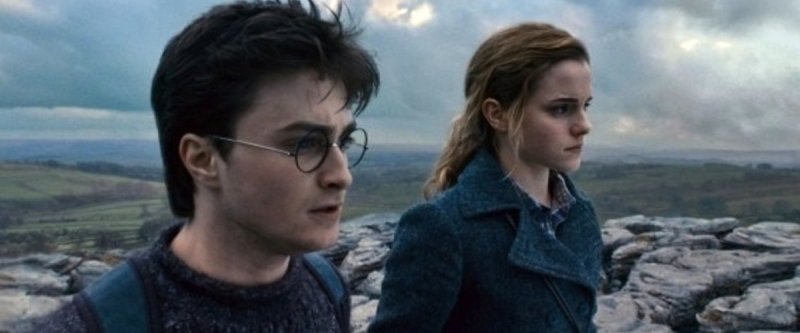
Director: David Yates

ACTION/ADVENTURE/FANTASY
Producer: David Barron, David Heyman, J.K. Rowling. Writer: Steve Kloves. Camera: Eduardo Serra. Music: Alexandre Desplat. Sets: Stuart Craig.
Daniel Radcliffe, Emma Watson, Rupert Grint, Alan Rickman, Helena Bonham-Carter, Ralph Fiennes, Robbie Coltrane, Brendan Gleeson, Jason Isaacs, Helen McRory, Richard Griffiths, Fiona Shaw, Julie Walters, Mark Williams, David Thewlis, John Hurt, Imelda Staunton
SYNOPSIS
Young wizard Harry Potter (Radcliffe) is now a young man and almost graduated from Hogwarts Academy. Along with his friends Hermione (Watson) and Ron (Grint) he has to race against time to destroy a set of evil pendants and uncovers the most powerful objects in his magical world: the Deathly Hallows.
REVIEW
The seventh of eight films based on author (now co-producer) Rowling’s seven novels about boy wizard Potter (the final book is being split into two movies for ease of adaptation…and to earn a few extra pennies for Warner Brothers before the series takes its curtain call, no doubt) shows a clear progression in terms of stylistic technique and maturity of handling what is essentially ‘young’ subject matter in the best film of the series so far.
It’s certainly a welcome trotter for Potter outside the now redundant confines of Hogwarts, a whimsical school whose cute fixtures and fittings (the animated pictures, endless moving staircases, creepy corridors and ghosts flying around) had long since outstayed their welcome.
We move almost immediately into high gear with some strong scenes of violence for a 12(a) rated movie, opening with a teacher being tortured in graphic fashion (something we return to later on). But this is a pretty grimly plotted outing altogether, death seeps not only into the title but also into every frame (the palate used by the cinematographer is unremittingly grey, drained of colour), even our heroic trio look consumptive.
Perhaps illness also explains their incessantly dull, wooden acting (particularly Watson), but this is a fault inherent in the entire series. It must have been daunting for three actors new to motion pictures to be surrounded by the cream of British Equity slumming it/queening it/lording it over them in often pointless and disposable character roles (Shaw, Griffiths, Walters – you’ve been spotted).
There are, however, performances to savour and they are always the baddies – Staunton isquiet megalomania behind twin-set and pearls and Bonham-Carter sexily sociopathic.
This film suffers from maladies that have also afflicted the other films – there are far too many characters milling around for a sound-bite and far too many new people introduced into this heady mix. There is too much ‘business’ in the writing leaving the narrative jagged (we hurry along from one scene to another and are then jolted into sedantry description) and cluttered. Kloves really needed a red pencil and blue scissors to hack a few situations out completely, particularly as some scenes are superfluous.
One thing Kloves does get spot on, is the humour. The film is frequently very funny and his cast jump at the chance to raise a few laughs, none more so than when, after his friends have cloned themselves as Harry to confuse his enemies, they re-group but wearing each other’s clothes and Harry ends up wearing a bra.
One moment to note, in fact to savour as it is probably one of the most dazzling images captured in modern film – Hermione tells a story about death and three Princes and her narration is accompanied by a beautifully animated story that recalls the Shadow Plays of yore. An incredible moment that knocks the noisy whizz-bang of the other special effects into a cocked hat.

Film review by Jason Day of the movie The Iron Lady, starring Meryl Street as British Prime Minister Margaret Thatcher. Co-starring Jim Broadbent and Olivia Colman.
Drama


Director: Abbas Kiarostami
DRAMA

Producers: Angelo Barbagalo, Charles Gillibert, Marin Karmitz, Nathanael Karmitz, Abbas Kiarostami. Writer: Abbas Kiarostami. Camera: Luca Bigazzi. Sets: Giancarlo Basili, Ludovica Ferrario.
Juliette Binoche, William Shimell, Jean-Claude Carriere, Agathe Nathanson, Gianna Giachetti, Adrian Moore, Angela Barbagalo.
SYNOPSIS
Author James (Shimmel) visits Tuscany to promote his latest book. Amongst his rapturous audience is single mum Elle (Binoche), who also acts as his guide around the beautiful countryside when he wants to pass the time. A chance comment from a café owner, who mistakes them for a bickering married couple, is continued as they play out an assumed life together until their false association begins to unravel.
REVIEW
A curiously satisfying Italian/Franco rural romp, curious because of the amusingly knotted-up storyline and satisfying because it looks lovely – obviously, as it stars the delectable, scrumptious French actress Binoche.
Delectable and scrumptious because (at the age of 46) she defies all known laws of human female biology with her ageless looks and incredibly firm bounteous breasts – a naturally cantilevered miracle of flesh that should be up there with the Pyramids of Giza as a wonder of the world. She’s certainly shown at her best by Bigazzi lovely photography.
Satisfying also because, with its own unique, nutty, messy intelligence this is a thought provoking film that looks around corners at the complexity and ridiculousness of human interactions, how other people’s perceptions define who we are and how they also help to construct our social world – if not the first, is this the finest phenomenological film?! Sociology theory cinema hardly weighs heavily on the annual output of movie-makers (the existential crime drama I Love Huckabees being the only other example this critic can pluck out of thin air) so as an off-beat idea this piece is to be cherished.
Kiarostami certainly has a clever central concept that also sets the scene for some searching and smart dialogue as Shimmel’s book details how copies of famous works of art legitimise and draw attention to the original piece – the parallels with the false love story are deliciously obvious. But as with other smart-arse movies, eventually the convoluted plot gingerly trips over itself and as the sole writer, even Kiarostami chickens out during the final uninspired reel, but it is certainly a fun and sensuous journey he takes us on to get there.
Shimmel’s pragmatic realism and Binoche’s sultry neuroticism run alongside each other with sexy and mysterious results – rather pointedly, they are also the only characters in the film credited with names; everyone else is a function or role, drawing further interest to them as the original, unique object . Although they jump at the comedy in the script, Moore as Binoche’s son steals their thunder in this regards with a nice line in wisecracking, perceptive teenager.

Film review by Jason Day of Fitzcarraldo, the Werner Herzog film starring Klaus Kinski.
Drama

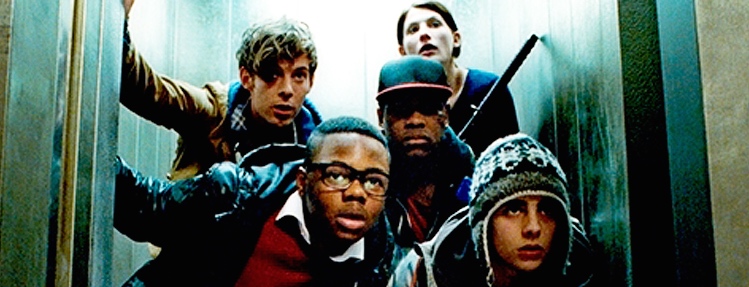
Film review of the alien action adventure set on a council estate in Stockwell, London and starring Nick Frost and John Boyega.
Director: Joe Cornish
ACTION/ADVENTURE

 CineSocialUK