Film review by Jason Day of Blow-up, the classic, seminal swinging sixties thriller about a photographer who accidentally photographs a murder. Starring David Hemming and Vanessa Redgrave.
Drama


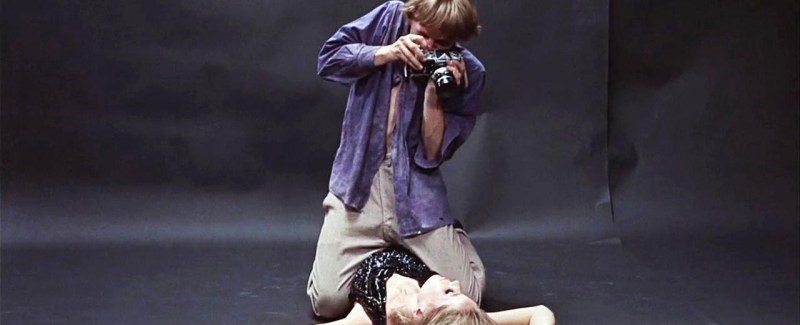
Film review by Jason Day of Blow-up, the classic, seminal swinging sixties thriller about a photographer who accidentally photographs a murder. Starring David Hemming and Vanessa Redgrave.
Drama


Directors: Jon Hurwitz, Hayden Schlossberg. Universal/Practical/Relativity Media/Zoe Pictures
COMEDY

Producers: Chris Moore, Craig Perry, Chris Weitz, Warren Zide.
Writers: Jon Hurwitz, Hayden Schlossberg.
Camera: Daryn Okada.
Music: Lyle Workman.
Sets: William Arnold.
Jason Biggs, Alyson Hannigan, Chris Klein, Thomas Ian Nicholas, Tara Reid, Seann William Scott, Mena Suvari, Eddie Kaye Thomas, John Cho, Jennifer Coolidge, Eugene Levy, Natasha Lyonne, Dania Ramirez, Shannon Elizabeth, Chris Owen.
SYNOPSIS
The original characters from the first three American Pie films reunite for their High School reunion. But all is not well. Jim and Michelle (Biggs, Hannigan) are married with a young son, but are having bedroom issues. Oz (Klein) is a successful sports news anchor with a gorgeous, but too wild, girlfriend. Kevin (Nicholas) is a put upon office man with an adoring girlfriend, but who hankers after his first love (Reid). Finch (Thomas) is a free-spirit troubled to be back in his home town. And party man Stiffler (Scott) is a temp who hasn’t grown up. It’s going to take a big, lad’s only weekend to sort them out.
REVIEW
It’s been 14 years since the first American Pie and yet the cast of now mid-30 something’s have hardly aged a day, though perhaps they seem younger because these characters are so firmly established in some teenage hinterland of only-just yesteryear.
Despite the gross out tone of the comedy with these films, they certainly struck a chord with movie audiences worldwide (each instalment has grossed over $200 million at international box offices), though it was perhaps with wildly halcyon eyes that the Evening Standard’s David Sexton eulogised so excessively over this new addition to the series.
Reunion looks set to do similar bumper business and, with a creeping sense of over-familiarity coming over this reviewer, it’s easy to see why and to identify with Sexton’s take on the proceedings. All of the original cast return (though, curiously, Lyonne appears only very briefly at the very end of the film. A shame, as she was a total joy in the first film), a similar team behind the camera (though original director Weitz is now only producer) and the set-up, though not revolving around teenage boys trying to get laid, involves their older versions…trying to get laid.
The only other thing that this has in common with its filmic forbears is a laugh out loud sense of humour. You can always rely on these movies to do exactly what it says on the pie box’s cooking instructions – literally scream at the funny moments. Only in American Pie will you see, within the first three minutes of screen time, a man masturbating with a sports sock, bleeding penises and women getting off with a shower head.
It’s a sign of the highest, impurest gross-out comedy genius, of course. And thankfully it continues as Scott (who became a huge star in the intervening years) manages to soil some horrible teenagers beer cooler and Levy (another casting joy, as Biggs’ unflappably frank and educational Jewish father) discovers partying and Stiffler’s lubricious mother (Coolidge).
Some scenes struggle to raise a laugh (trying to get drunken teenager Cara back into her bed is a laboured, limp adventure; too much is made of Klein’s apple-pie good looks; Suvari is a sour garnish, but she always was).
But, whither goest thou American…whatever? Well, despite this being a very welcome reunion, it leaves the feeling that a longer period should elapse between this and the next hook up. Perhaps American Alzheimer’s with the boys joining forces in a retirement village to dodge their meds, chase the nurses (without their elderly wives finding out) and swig shots to toast their youth. Stiffler’s Mom could be preserved in formaldehyde, forever winking suggestively at handsome young geriatricians. The future possibilities for this series are endless!

Film review by Jason Day of the silent movie Beggars Of Life starring Louise Brooks, Wallace Beery and Richard Arlen. Directed by William A. Wellman.
Silent


Director: Oliver Hermanus. Moonlighting Films.
DRAMA

Producer: Didier Costet. Writer: Oliver Hermanus. Camera: Jamie Ramsay. Music: Ben Ludik. Sets: Johan Oosthuizen.
Deon Lotz, Charlie Keegan, Michelle Scott, Roeline Daneel, Sue Diepeveen, Albert Maritz.
SYNOPSIS
Francois (Lotz) owns a sucessful lumberyard and enjoys all the trappings of a middle-class life: a demanding, trophy wife (Scott), a big, mouldering house and the laborious 9-5 grind. That is until he sees Christian (Keegan), the handsome, charming, grown-up son of a former Army pal. Jolted out of his slumber by Christian’s stunning beauty, but repulsed by his own homosexuality, he sets about becoming closer to the young man, without revealing his true feelings.
REVIEW
The literal translation given here of the Afrikaans term Skoonheidt (pronounced Skwin-high) lends an inaccurate and misleading explanation of our lead character’s motivations. Another, fuller interpretation of the word could be that it means a ‘pure’ or ‘clean’; a subtle inflection that should add oodles more layers of emotional complexity to Hermanus visually impressive, barren sexual crisis drama. The sparks of chilling inventiveness he produces however helps only to mask the fact that the final result falls short of this.
Full plaudits therefore must go to Lotz who turns in a staggering, multi-faceted performance of tortured, obsessive longing. He’s a modern day Gustav von Aschenbach, the dying composer facing up to his own homosexual feelings in another aching study of the older man falling for a vision of youthful beauty, Visconti’s delicate Death in Venice.
And just as Dirk Bogarde, lingering on the Lido as cholera grips thar titular city, develops a note perfect performance at a distance from the object of his affections, so does Lotz. The deep, penetrating stares from secluded locations, sideways looks stolen when Christian’s attention is elsewhere, sweating and panting as he goes to more humiliating steps to keep him firmly fixed in his gaze. Bogarde might not have stooped to buying ipods and then faking Christian’s girlfriend’s car being stolen, but Lotz likewise becomes more of a revelation as his repressed existence slowly unravels.
From the prolonged, opening shot of Francois staring across a crowded room, his eyes resting on Christian for the first time; Hermanus is in control of a carefully constructed mise en scene of isolated misery.
The amusingly awkward, illicit sex meet for closeted men in the outback makes it clear that Francois is not the only middle aged man in this hetero heartland to have such hidden longings. Immediately afterwards, the shots of vast, isolated fields and empty cars correlate well with the emotional void in these men’s lives.
The physical relief Francois et al feel from this danger sex is hammered home even further by the sterility of their martial beds; Francois’ grasping, vain and silly wife nags him to clean the pool and do something with their huge house, though she too is having an affair in what also looks like a house away from prying eyes. His home is always totally dark; Francois hides in the shadows both in public and in private.
Despite this awesome grasp of the visual side of the film, it still fails to rise to the occasion. It is a shame that Hermanus does not push harder in showing how a glimpse of beauty causes the torpid, ordered life of the older man to crumble in spectacular, tragic fashion (his wife nags, but is everything else really that bad for him)? We have seen this done before and with more devestating effect; Hermanus is unable or perhaps unwilling to fully drag Francois down into the repulsion he feels for himself.
Keegan is a heart-stoppingly attractive counterpoint to the hulking, pale and hairy Lotz. A tanned, buffed gym bunny who continually seems to emerge out of nowhere as if he were an angel stopping off for a few hours whilst his cloud is being serviced in a celestial garage (he even drives to rescue a drunk Francois from a Cape Town gay bar). Contrasted with Francois’ vicious sexuality and, as the title of the film suggests, he is presented as almost virginal, beyond mere human sex. His sweetness is exacerbated by his ambivalent flirtatiousness, naively leading his sexually enraged “Uncle” on to a devastating denouement.
A difficult but rewarding watch.
In English and Afrikaans with subtitles.

Director: Jonathan Liebesman. Warner/Legendary/Thunder Road.
ACTION/ADVENTURE/FANTASY

Producers: Basil Iwanyk, Polly Johnsen. Writer:David Mazeau, David Leslie Johnson. Camera: Ben Davis. Music: Javier Navarrete. Sets: Charles Wood.
Sam Worthington, Liam Neeson, Ralph Fiennes, Edgar Ramirez, Toby Kebbell, Rosamund Pike, Bill Nighy, Danny Huston, John Bell, Lily James, Sinead Cusack.
SYNOPSIS
Now living the quiet life as a fisherman with his 10 year old son, half mortal/half God Perseus (Worthington) is called upon one last time to save irreligious humanity when his father, the great God Zeus (Neeson) is captured by his other son, the jealously enraged God of War Armes (Ramirez). Perseus has to rescue Zeus, with the help of warrior Queen Andromeda (Pike) and comic foil Agenor (Kebbell).
REVIEW
Clearly out to best Clash of the Titans in terms of audacious spectacle and popcorn munching fun, director Liebesman (Battle Los Angeles and, in the near future, the remake of teenage mutant Ninja Turtles) is clearly in his element with this sand and sandals daftness.
Topping the original was always going to be a foregone conclusion, given that Clash was such a wooden, serious and dull affair, itself eclipsed by the equally leaden but splendidly crafted 1981 film, the one with the memorable stop-motion special effects from Ray Harryhausen.
Liebesman, thankfully, is a man with a good sense of humour and Wrath ticks along nicely with just the right sort of ripe, juicy, Hollywood dialogue that befits a film raiding classical antiquity with scant regard for accuracy or respect.
Casting Nighy, for starters, was an audience pleasing stroke of genius. Nighy, who looks as though he has tottered onto the set still pissed from the wrap party of another film (an update of The Tempest perhaps, set on a council estate in Bury and in which he plays a genial, amnesiac Prospero) plays the God Hephaestus as a sprightly Northerner with poor short term memory but plenty of long term recall for a misspent youth (“Zeus showed me how to seduce Mermaids…handy that!”). It’s a performance that shouldn’t work, it should stand out like a sore thumb unbalancing the rest of the film and scream at the critic to scream at him for doing this…but it actually works splendidly thanks to his pitch-perfect comic timing and the fact that the other performers also belong on another film set (Pike from the hockey fields at an indeterminate but frightfully expensive private school in a generic British period drama; Kebbell from an episode of Eastenders etc).
The jokes continue in the unintentionally, joyously funny dialogue; when Worthington has to square up with his half-brother, amidst dozens of Titans killing hundreds of fellow soldiers, he says to Pike with the utmost solemnity: “Keep them off me”. Neeson and his estranged brother Hades (Fiennes) prepare to confront their all-powerful father by saying “Lets have some fun…like in the old days” (the old, old days presumably). The immortal bros later combine their powers in a Ghostbusters “Cross Streams!” finale.
Worthington’s gruff, whispering monotony contributed in no small part to the snooze fest that Clash became and he seems more tiresome here, so hats off again to the top drawer supporting cast for helping prick the audience’s attention.
Filmed in 3D, the technology is magically realised in a key number of arresting scenes: a roller-coaster ride through the mantle of the Earth with boulders flying straight toward you and a dizzyingly designed labyrinth to Tartarus, the underground prison. Thankfully, the audience is given plenty of time away from these moments to right themselves and avoid the nausea that 3D can create.
(P.S. many thanks to my good friend and classics master Katie Taylor for some helpful comments along the way)!

Film review, written as a social services case, by Jason Day of the silent melodrama about a poor, abused girl in Victorian London who is befriended by a Chinese man. Starring Lillian Gish and Richard Barthlemess.
Silent

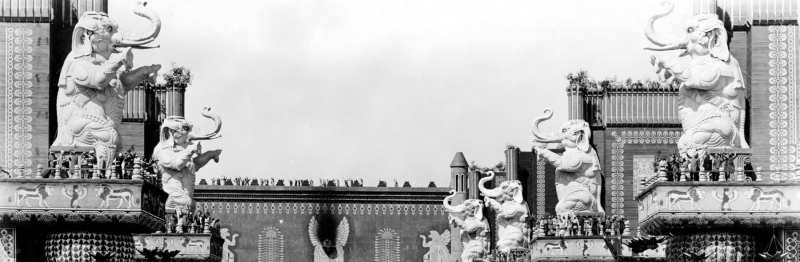
Film review by Jason Day of Intolerance: Love’s Struggle Throughout the Ages, the epic silent movie directed by D.W. Griffith and starring Mae Marsh and Robert Harron.
Silent


Director: D.W. Griffith. United Artists.
SILENT

Producer: D.W. Griffith. Writer: Anthony Paul Kelly. Camera: G.W. Bitzer. Music: Louis Silvers. Sets: Clifford Pember, Charles O. Seessel.
Lillian Gish, Richard Barthlemess, Lowell Sherman, Burr McIntosh, Kate Bruce, Mary Hay, Creighton Hale, Emily Fitzroy, Porter Strong, George Neville, Edgar Nelson.
SYNOPSIS
A young and naive country girl (Gish) is tricked into a fake marriage by a wealthy cad (Sherman). She becomes pregnant and he abandons her. Having the baby out of wedlock, it soon dies and she leaves. Finding work in the home of Squire Bartlett (McIntosh), whose son David (Barthlemess) takes a shine to her, she finds happiness. But when Sherman turns up on their doorstep, the Squire finds out about Gish’s past and orders that she be cast out into a storm. Having kept quiet for so long, Anna points the finger of blame onto Sherman and leaves. David chases after her and has to rescue her from an ice-flow.
REVIEW
High drama (and, at nearly 2 and a half hours, a lengthy one too) from Griffith, with the hoariest, mustiest of plots, even for Victorian theatre (it’s based on a play by William Brady and Joseph Grismer that had already been filmed twice).
This was the first of two romantic epics for Griffith that were his last films to turn a decent profit before an inglorious run of flops in the 1920’s that effectively rendered him unemployable and it is justifiably one of his most fondly remembered pictures.
Pastoral dramas such as this were popular with American audiences and Griffith uses the halcyon atmosphere of a country idyll to show how this can mask social injustice and prejudice with consummate skill. He was, however, a complete idiot for letting his penchant for tactless and inappropriate comedy spoil the fine story.
None the less he builds the drama excellently with an impeccable grasp of editing and camerawork as he runs to the now famous climax when Barthlemess has to jump across moving ice sheets on a frozen river to rescue Gish (yes, that really is her floating toward the frigid waterfall). It still carries a certain excitement to this day, thanks to Griffith’s renowned skill at cross-cut editing.
Of this scene, Gish later claimed to have permanently damaged one of her hands after trailing it for extended periods in the icy water. Griffith, a perfectionist, demanded several takes and Gish, an actress who sought perfection in her work with equal commitment, continued without complaining.
The top form silent cast are led by the luminous Gish, who skilfully manages to not come across as sickeningly sweet and bears life’s vicissitudes with great dignity considering a well placed kick to some of the male characters would have gone down a treat. Barthlemess displays true grit, despite being a little slow to cotton on to Gish’s situation and Sherman is a delightfully charming arsehole.
Although no cameraman is officially credited, Griffith’s regular Bitzer was on hand, with help from Hendrik Sartov and Charles Downs. The results are matchless.

Film review of the silent movie starring Lillian Gish about an innocent girl forced into marriage in the Texan desert.
Director: Victor Seastrom (Sjostrom). MGM
DRAMA


 CineSocialUK