Film review by Jason Day of the silent epic from F.W. Mourn about an old man who sells his soul to the devil in return for his youth. Starring Gosta Ekman and Emil Jannings.
Director: F.W. Murnau. 106 mins. Parufamet (Paramount/MGM & Ufa).
Silent


Film review by Jason Day of the silent epic from F.W. Mourn about an old man who sells his soul to the devil in return for his youth. Starring Gosta Ekman and Emil Jannings.
Director: F.W. Murnau. 106 mins. Parufamet (Paramount/MGM & Ufa).
Silent
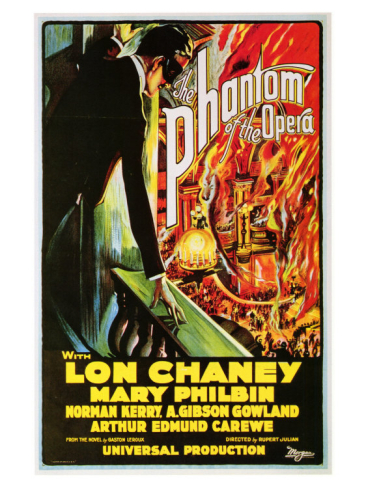
Director: Rupert Julian. Universal.
SILENT

Producers: Carl Laemmle. Writers: Elliott J. Clawson, Raymond L. Schrock. Camera: Milton Bridenbecker, Virgil Miller, Charles Van Enger. Music: Joseph Carl Briell, Gustav Hinrichs (original). Others at reissue: Sam Perry (1929), Gabriel Thibaudeau, Rick Wakeman (both 1990), Roy Budd (1993), Carl Davis (1996). Sets: Ben Carre.
Lon Chaney, Mary Philbin, Norman Kerry, Arthur Edmund Carewe, Gibson Gowland, John St. Polis, Snitz Edwards, Mary Fabian, Virginia Pearson.
SYNOPSIS
Erik (Chaney) is a former singing star, horribly disfigured now reduced to lurking in the vast underground catacombs and cellars of the Paris Opera House. He nurtures the talent of young chorus girl Christine (Philbin) whom by devious methods, he hopes to place in a production of Faust. He also wishes her to see beyond the mask that hides his tortured face and fall in love with him, but is enraged when she pursues her own love in handsome Raoul (Kerry) against his instructions. He kidnaps her so Raoul and a strange, undercover policeman (Carewe) attempt to rescue her.
REVIEW
Chaney’s second, bug-budget horror blockbuster after The Hunchback of Notre Dame (1923) is set in the same city and eagle-eyed silent movie fans will note that Chaney’s carriage at the end of the film is seen speeding past the facade of Notre Dame cathedral, a little in-joke for contemporary fans.
This is a slow-moving adaption of Gaston Leroux’s famous novel, with a tortuously prolonged opening as the Phantom crawls around a section of his subterranean lair, watched by an Opera orderly. The lack of action isn’t helped by the over-use of letters, constantly passed between characters, to describe action – clunky and effective only in slowing things down more.
Julian quarrelled on set with Chaney and was dismissed at some point during the production, which might explain the slightly unbalanced feel throughout, as if a few more hand than necessary were fingering the clapperboard. Chaney himself directed a few sequences.
Of what remains, there are some giddily enjoyable flourishes, such as the opening that uses a group of silly ballet dancers to set the mystery, as the girls twirl in their tutus around the dank staircases and cellars.
If the unmasking of the phantom is more funny that scary, the eye-catching multi-story sets of the Paris underground that is the phantom’s lair and the Masked Ball, filmed in a beautiful trifle of two-tone colour, more than make up for it. This last scene, lasting only a few precious minutes, would have increased the film’s budget somewhat, so it’s a shame it doesn’t last longer and whomever directed it didn’t have the time to have some more fun with the dancers.
Philbin’s strange, hyper-gesticulatory performance is richly rewarding, she acts as if constantly in a trance (her character is under the spell of her master, at least in her opening scenes). This is a hangover from the overly artificial turns in German films such as The Cabinet of Dr Caligari, but this is one to enjoy, slightly mad, but eye-catching (it helps that she is also extremely pretty).
Chaney seems possessed himself, though it could be as a result of what looks like excruciating prosthetics that push his nose up and give him gross, jagged teeth and a bald pate with lank, greasy hair. Every extreme physical stereotype of ugliness is utilised by Chaney, who designed the make-up.
The script is a typical silent blockbuster type of this period, slightly nonsensical and in dire need of a continuity editor. Christine, after being led by a strange man through the catacombs, talks at length to her master but, only after seeing the coffin he sleeps in, does she twig that this man might be the same person as the Phantom. He calls her mad – clearly having little insight into his own sociopathic tendencies (this is just after he has dropped a hefty chandelier on Paris’ hoi polloi).
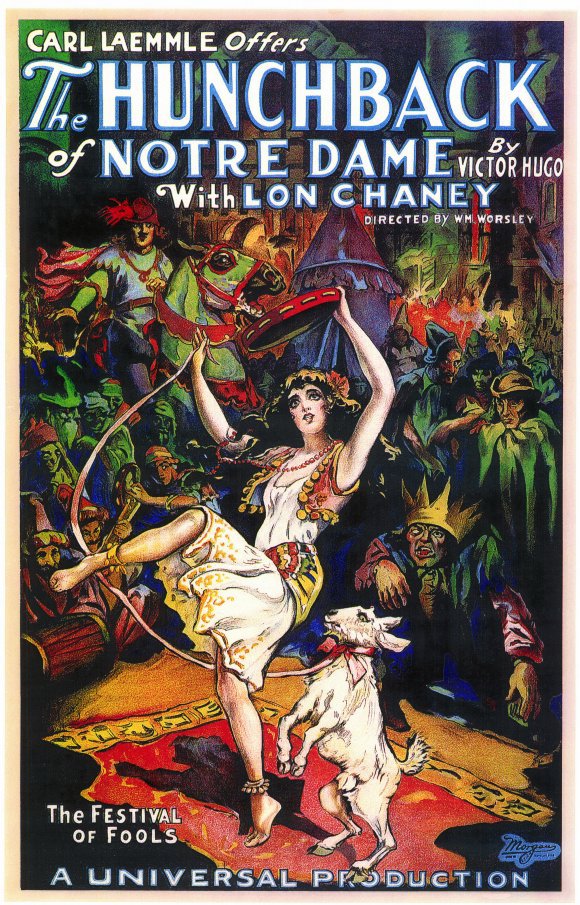
Director: Wallace Worsley. Universal.
SILENT

Producers: Carl Laemmle, Irving Thalberg. Writer: Edward T. Lowe, Jr. Camera: Robert Newhard. Sets: E.E. Shelley, Sydney Ullman.
Lon Chaney, Patsy Ruth Miller, Norman Kerry, Kate Lester, Winifred Bryson, Nigel De Brulier, Brandon Hurst, Ernest Torrance, Tully Marshall, Harry van Meter, Raymond Hatton.
SYNOPSIS
Paris, 1482: Set against the backdrop of growing public resentment at the laws and dictates of King Louis XI (Marshall), Quasimodo (Chaney) a deformed bell ringer at Notre Dame cathedral falls hopelessly in love with the beautiful Gypsy dancer Esmerelda (Miller). When Esmerelda is tried with the attempted murder of her lover, the soldier Phoebus (Kerry), he attempts to rescue her as revolution erupts beneath his beloved cathedral.
REVIEW
Caution, literary respect and a fair degree of common sense are thrown to the wind in the great grand-daddy of all adaptations of Victor Hugo’s mammoth and largely unexciting romantic epic (were all of those chapters about Gothic architecture really necessary?).
‘The Man of a Thousand Faces’ Chaney headlines as the poor, mis-shapen campanologist, though it is not one of his better turns.
The hasty editing, particularly in the horrifically rushed introductory scenes (possibly down to there being several versions of the film of differing lengths around the world – not uncommon for silent movies) leads to a large amount of information about characters, themes and sub-plots being whisked by the viewer in quick succession. Hugo’s book is a feat for any screen-writer to compress so it is probably not surprising that sections were skipped or skimmed over, but the irritating over use of title cards to sum up whole people and their motivations when this could have been expressed to the camera shows either poor directorial skills on the part of Worsley or nonexistent talent when wielding the scissors in the cutting room.
We also miss out on those subtle, telling aspects of the story, such as Quasimodo’s dependent relationship with his master Frollo, but the sound era would help rectify such things.
Another thing the sound era would help clear up, is that implausibility that silent movies tended to lean toward, those moments that don’t really make sense. Quasimodo, after being described as totally deaf and half blind, is immediately seen spying on the crowd assembled a hundred feet below and is able to pick out the people insulting him, as the bells of the cathedral ring behind him.
One thing Worlsey really misses a trick with are these crowd scenes. Later versions, including Disney’s animated go in 1996, use the crowd as an integral part of the story, as if it is a living organism, swelling en masse at various points with a fluid motion. Despite the alleged 3,500 extras used in this film, these moments seem empty, slightly scrappy, as if the man with the megaphone in his hand is whispering in the wrong direction.
On the acting front, and again to be democratic, it is difficult to see whether this a poor choice of cast (Miller and Kerry were never top flight actors of this period) or if Worsley was unable to elicit more innovative, subtle performances from his ensemble. Chaney is supposed to be the man of the moment here but his turn is on the edge of over melodramatic. He never really evinces true sympathy, though it doesn’t help that the titles spell him out as being something of a bad one, consumed with hatred for the citizens of Paris who despise his deformity (the novel and subsequent adaptations do not dwell on this).
There are some superb displays of villainy though; De Brulier as Don Claudio (Claude Frollo in the novel) is genuinely creepy and Torrance proves why he became one of the most famous of silent bad guys as Clopin, King of Thieves.
Pity poor Kerry though, who would spend most of the next six years playing second fiddle to Chaney (he would do so again in The Phantom of the Opera two years later and The Unknown in 1927).
Universal provide the means to an end to recreate Paris with a lavish eye, including the quick glimpses we get of the fetid underground sewers and Court of Miracles. This is described as a place where the blind see and the lame walk, rather like a medieval Atos assessment centre.

Film review by Jason Day of The Spanish Dancer, the silent film comedy romance starring Pola Negri and Antonio Moreno.
Silent

Director: Alfred Hitchcock. British International Pictures (BIP)
COMEDY
Producer: John Maxwell. Writers: Alfred Hitchcock, Eliot Stannard. Camera: John J. Cox. Music: Mira Calix (2012 reissue). Sets: Wilf Arnold.
Betty Balfour, Jean Bradin, Ferdinand van Alten, Gordon Harker.
SYNOPSIS
Spoiled heiress Balfour defies her father by running off to marry her handsome but poor lover (Bradin). But Daddy (Harker) has a few tricks up his sleeve to show his daughter who is in control.
REVIEW
Hitch’s effervescent silent comedy stars the irrepressible and mostly adorable Balfour (so called the British Mary Pickford, though here she’s far gamier and raucous than eternal child of the screen Pickford ever was) and is as delightful as the bubbles up your nose that champagne itself can bring.
Hitch was never the master of comedy, but when he attempted one they were clever and efficiently produced. Champagne is an of-it’s-time frothy confection on the surface, but underneath runs a vein of cutting social observation. Hitch’s sly swipes at the frivolously hedonistic ‘It’ girls of the day have more than just a whiff of mendacious commentary. Perhaps this explains the ‘fun’ that comes from the storyline as Balfour is hoodwinked by all around her, veritable torture for such a flibbertigibbet.
His attention would always be on the visuals and there is an awesome opening shot, as a champagne bottle’s cork and contents explode over the camera, cutting directly to the point of view of a club reveller downing a glass of bubbly, the dancers in front of him magnified through the side of the glass. There is an ingenious trick shot later, aboard a rocking ocean liner, the crew lurching to and fro in perfect unison. Later, Balfour appears to whizz in and out of Bradin’s view as he succumbs to sea sickness.
Balfour has buckets of charm as the original 24 hour party girl. Bradin is good looking but otherwise vacuous as the socialist minded boyfriend whom she adores.
This reissue, from the British Film Institute, features an intriguing, other-worldly score from Calix, who herself described her music as “psychedelic”. Audiences will certainly agree; it may take a little getting used to. It’s interesting to note how a different score can totally change the meaning and appreciation of a silent film. Calix makes eerie use of violins during the opening, as shrill and nerve jolting as those Bernard Hermann would utilise in Hitch’s Psycho (1960). It is a slightly epileptic modern jazz, almost discordant but never displeasing, like a pleasant hangover. The original vocals, by the Juice vocal ensemble, are almost a sibilant wail and veer from Madonna’s ‘Papa Don’t Preach’ to Pink’s ‘Get the Party Started’, suitably complementing the kooky acoustics.
A tasty and satisfying vintage that has been made glorious for modern eyes and ears.

Film review, by Jason Day, of D.W. Griffith’s early silent movie epic Judith of Bethulia, starring Blanche Sweet in the title role.
Silent

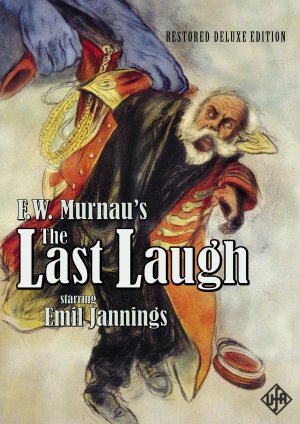
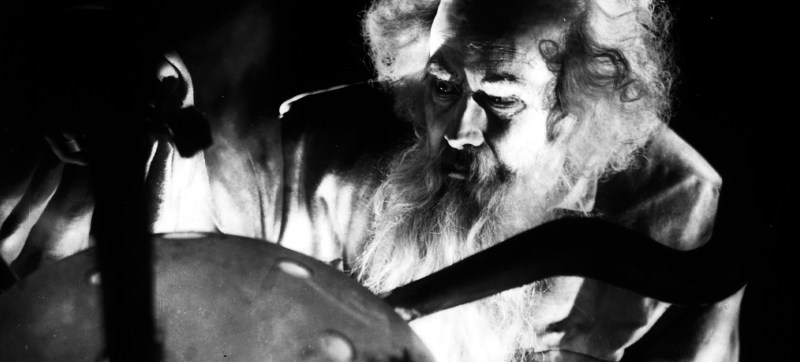
Director: F.W. Murnau. UFA.
SILENT

Producer: Erich Pommer. Writer: Carl Meyer. Camera: Karl Freund. Music: Werner Schmidt-Boelcke, Giuseppe Becce, Karl Ernst Sasse. Florian C. Reithner (1996 reissue). Sets: Edgar G. Ulmer.
Emil Jannings, Maly Delschaft, Max Hiller, Emilie Kurz, Hans Unterkircher, Olaf Storm, Hermann Valentin, Georg John, Emmy Wyda.
SYNOPSIS
Physically unable to carry the burden of his duties any longer, a hotel doorman (Jannings) is given a less taxing but more menial position as a bathroom attendant. Embarrassed and humiliated that his neighbours will no longer see him for the preening peacock that he is, he steals the coat of his uniform in a bid to pull the wool over their eyes. But his peeping in-law Kurz spots the new man on the job and tells his neighbours.
REVIEW
One of the crowning glories of the golden age of expressionistic film-making in post World War I Germany (expressionism being an artistic movement where, to put it simply, the artistic product is exaggerated wildly for emotional effect, to evoke moods or ideas), this is a simple story about human pride and human failings that is, correspondingly. distorted onto a lavish, multi-million DeutschMark canvas.
Based on Nikolai Gogol’s anti-militaristic novel The Coat, it is turned by expressionist supremo Murnau into a visually stunning, gripping tale that hits its mark despite, or perhaps because of, Murnau’s decision to not use a single title card to explain the action. Silent movies had progressed to such a level of stylistic sophistication that written descriptions were no longer necessary. This addition (or subtraction) was not repeated in other films of the period though.
Among the most notable features here is the admirable use of mobile camera work that really liberates the action; the moment where the porter imagines the Atlantic Hotel is going to topple down on him and the night watchman’s torch that seems to focus Jannings’ desperation.
All in all, Murnau created perhaps the most modern and accomplished of silent films up to this point.
Narrative wise, the story is strong when it comes to exploring themes of how the importance placed on uniforms can envelop people and leave them to assuming a role dictated by position and it is interesting to see how Murnau positions other people in relation to the obsession Jannings has with his coat – his neighbours protect it from the dust they beat out of their carpets. It doesn’t require a huge leap of faith to link this theme to the still very recent memories of WW1 and it is prescient in terms of what would happen only a decade later in Germany under Nazi rule.
Interesting to note that the porter/janitor character is unnamed throughout. In fact, every character is defined by their function or relationship to him. This impersonality is a little unsettling, as if Murnau is refusing us identify with his characters on a personal level, but it concentrates the mind a little more on what people are doing rather than who is doing it.
There was no other face of the silent era that was better constructed to convey angst, desperation and dismay at the vicissitudes that life can throw at us that Jannings. He always excelled in roles that required him to suffer nobly as opprobrium is heaped upon him and, here, his terrified, kitten-like eyes are almost painful to watch. It is a performance of commendable physicality – bolt upright and proud when we first see him, saluting his neighbours and fastidiously attending to his appearance and then crook-backed and shifty as the film finishes.
Quite why Murnau then had to ruin all of his good work with a completely disposable epilogue is another matter, but The Last Laugh is still a grand piece.
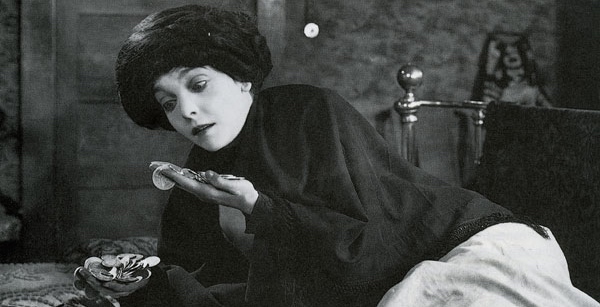
Film review of the silent movie epic directed by Erich von Stroheim starring Zasu Pitts as a woman who wins a small fortune on a lottery and whose life with her simple minded dentist husband McTeague (Gibson Gowland) and former beau Marcus (Jean Hersholt) descends into miserly obsession, madness and murder as she tries to retain every single cent of her winnings.
To like this review, comment on it or to follow this blog, please scroll to the bottom of the page.
Director: Erich von Stroheim. MGM, 239 minutes. (PG)
Silent
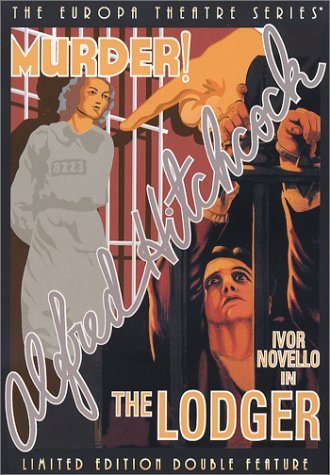
Film review of the silent Alfred Hitchcock film starring Ivor Novello.
Director: Alfred Hitchcock. Gainsborough/Carlyle Blackwell.
SILENT

Producers: Michael Balcon, Carlyle Blackwell.
Writers: Alfred Hitchcock, Eliot Stannard.
Camera: Gaetano di di Ventimiglia, Hal Young.
Music: Ashley Irwin (1999 reissue).
Sets: C. Wilfred Arnold, C. Bertram Evans.
Ivor Novello, June, Marie Ault, Arthur Chesney, Malcolm Keen.
SYNOPSIS
There has been a series of brutal murders, in which the victims are all blonde women. Young Daisy’s (June) parent’s take in a mysterious and creepy, but handsome, young lodger (Novello). He has a habit of being absent from the house during the time that each new victim is slain. But pretty, golden haired Daisy is drawn to him and spends more time in his rooms, even as her mother (Ault) and her ex-boyfriend, a policeman (Keen) start to gather circumstantial evidence against him.
REVIEW
Jack the Ripper has long held a grip on British criminology and the public fascination with crime ever since he committed his atrocities against women in the 1890’s.
Within less than a year, this still unknown assailant had killed five prostitutes in the east end of London. Despite a committed police effort and local uprising at their perceived inefficiencies, he was never caught. To this day, he hasn’t been conclusively identified, so his presence looms over us still somewhat.
In this film, based very loosely on the case, a young director who would cast his own, rather portly, shadow across international cinema, lets us see the flip side of the coin in the Ripper saga.
Known to most audiences by the first part of it’s title (for a ‘story of the London fog’, there is precious little of that in any part of the film), this early offering from Hitchcock offers an intriguing taster of what he would deliver to film audiences over the next half century.
On reflection, and seen as a whole piece, The Lodger is not as arresting as Hitch’s other silent films (Blackmail being an obvious example). This film can perhaps be seen as Hitchcock groping his way toward the full narrative and stylistic mise en scene that would later be so easily recognisable as ‘Hitchcockian’.
This furtive fumbling in the cinematic darkness might explain The Lodger‘s plodding pace that is a major detraction. For less than an hour and a half, the time seems to drag. The relative lack of the key ingredients that make Hitch’s films uniquely his compounds this feeling further.
Never the less, there are some intimate, sexually charged shots as Hitch and his cameraman catch Novello and June in glistening soft-focus close-ups as they kiss for the first time. His taste for expressionistic visual flourishes abounds (Daisy’s mother in her starkly designed room; the silhouette of the window frames that projects a cross on Novello’s face when he first moves in).
Daisy’s nosey and perceptive mother (Ault), who cottons on to Novello’s weirdness before the coppers, elaborates on Hitch’s obvious mistrust of the police and capture, that would be most noticeable in later products, such as The Wrong Man and North by Northwest.
Novello may have been the darling of London stage and society at this time but his histrionic, fey turn is as suspect as his character (for a man attempting to go undercover, he blows his cover with creepy Nosferatu body language stares before he’s even stepped foot inside the front door).

Film review by Jason Day of Queen Kelly, the unfinished silent film starring Gloria Swanson as a convent girl who is seduced by a Prince. Directed by Erich von Stroheim.
Silent
 CineSocialUK