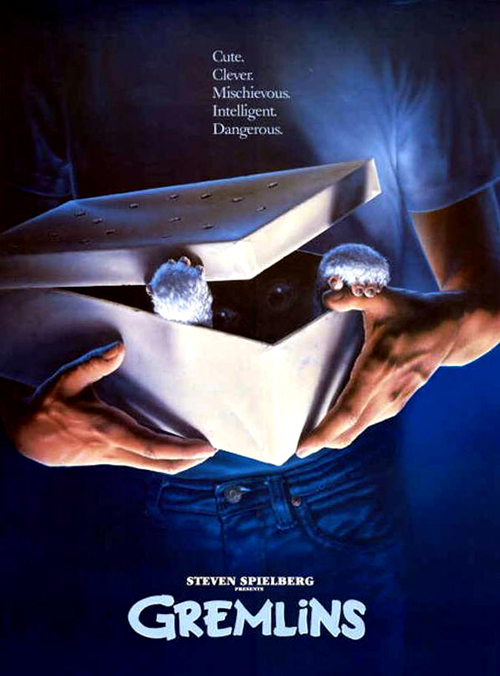
Gremlins (1984)

Standard

Director: Joe Dante. Warner Bros./Amblin (12a)

COMEDY

 

Producers: Michael Finnell. Writer: Chris Columbus. Camera: John Hora. Music: Jerry Goldsmith. Sets: James H. Spencer.

Hoyt Axton, Zach Galligan, Phoebe Cates, Corey Feldman, Dick Miller, Frances Lee McCain, Judge Reinhold, Harry Carey Jnr., Jackie Joseph, Polly Holliday, Keye Luke.

SYNOPSIS

One Christmas, third rate inventor Randall Peltzer (Axton) stumbles upon a Chinese curiosity shop staffed by the mysterious Mr Wing (Luke). Despite Mr Wing’s initial refusal, Peltzer pesters him for the Mogwai in his shop, a cute, furry creature that sings adorably. Eventually, Wing acquiesces but only if Peltzer can adhere to three important conditions: that he never exposes the Mogwai to sunlight, never feeds him past midnight and never, ever lets him get wet. Peltzer agrees and returns home to give the Mogwai, called Gizmo, to his excited son (Gallagher). Chaos reigns, however, when Gallagher accidentally breaks every one of the rules. The town of Kingston Falls will never be the same again.

REVIEW

Writer Columbus clearly enjoys causing mayhem during the festive season. He would later direct the comedy Home Alone in which a little boy almost kills two inept burglars who are trying to rob his home. His two Harry Potter movies saw plenty of sorcery amidst the snow flakes. Here he first displays his talent for creating utter chaos at Christmas in this sly horror update of Frank Capra’s It’s a Wonderful Life.

Galligan is the James Stewart character who, whilst not contemplating suicide, is a depressed lad from a poor family, stuck in a dead-end job as a bank clerk, with a horrible rich customer (Holliday) who wants to kill his scruffy dog and a boorish boss (Reinhold) who is constantly breathing down his neck and trying to bed his sweet, Donna Reed-esque girlfriend (Cates).

So far, so anodyne, and the film dawdles along at a warm and welcome pace, but Columbus is only interested in showing us this torpid side of Main Street Americana as the sweetest of back drops to the main action when the now ubiquitous, rabid title monsters spawn from the most adorable and innocent of creatures to signal the little town’s veritable death knell in a one night only riotous orgy of comic cruelty, destruction, drunkenness and violence.

Credit where it’s due, Columbus and Dante really know how to let rip when the Gremlins appear. Nothing is off limits here and director pushes the writer’s imagination: dogs are strung up with Christmas lights, bars are drunk dry and trashed like in the Wild West, vicious old ladies are sent careering into a crisp moonlit sky when their stair lifts are hot-wired, houses are trashed with JCB’s and sweet little housewives are forced into knife wielding frenzies of anger that end with death by microwave and blender.

Axton’s shaggy charm and patience as the ultimate in good guys who, while they may have failed most of their duties in life have managed to be a good parent and provide a loving home. He is the sole great turn here and manages not to be out-classed by the puppetry around him. He also seems to avoid most of the terror meted out to his poor family. Holliday also has fun as the horrible Mrs. Deagle.

There’s possibly a life lesson in this film. Perhaps some wider philosophical rumination on the creation of evil. Maybe, in these ecologically aware times, it could even been seen as an early tract on the responsibility of man as steward of the earth to look after his planet and fellow creatures with care or face the wrath of God. Perhaps, but it’s much more fun to see this for what it is, top-level at least, as a laugh out loud escalation of deliciously mischievious and wicked horror.
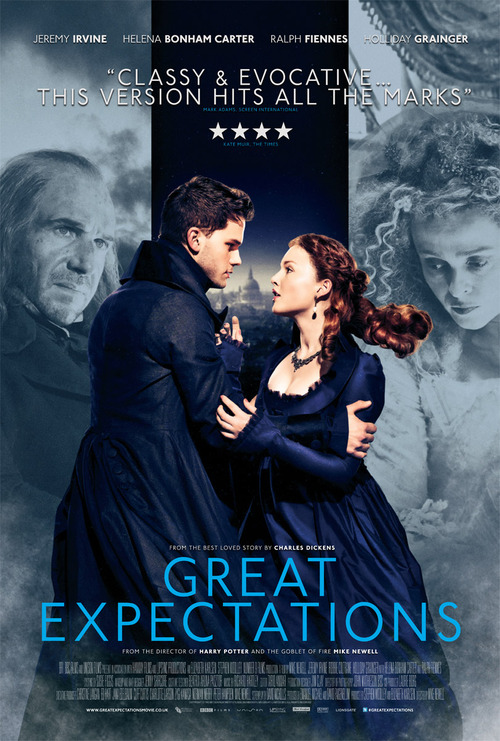

Great Expectations (2012)

Standard

Director: Mike Newell. BBC/Lipsync/Number 9/Unison/iDeal Partners Film Fund. (12A)

HISTORICAL/PERIOD/EPIC


Producers:
David Faigenblum, Elizabeth Karlsen, Emanuel Michael.
Writer: David Nicholls.
Camera: John Mathieson.
Music: Richard Hartley.
Sets: Jim Clay.

Ralph Fiennes, Helena Bonham-Carter, Jason Flemyng, Robbie Coltrane, Jeremy Irvine, Holliday Grainger, Sally Hawkins, Sophie Rundle, Ewan Bremner, David Walliams, Jessie Cave, Tamzin Outhwaite, Olly Alexander, Ben Lloyd-Hughes, Toby Irvine, Helena Barlow.

SYNOPSIS

A perverse destiny is spread before the innocent young blacksmith’s apprentice Pip (Irvine and Irvine) when he is one day called upon to go and play at the mouldering house of Miss Havisham (Bonham-Carter), a middle-aged and dotty woman, and her haughty adopted daughter Estella (Barlow and Grainger). Through a series of meetings, he becomes dissatisfied with his lot in life. He is therefore delighted to receive news as a teenager that he has come into a handsome annuity. Believing Havisham to be his benefactor, he travels to London, forgetting his nearest and dearest Joe (Flemyng), his true and faithful father figure, to pursue the life of a gentleman. It is a decision that has devastating ramifications for all around him.

REVIEW

There have been umpteen adaptations of Dickens’ perennial psychological classic stretching right back to the silent era. Writers and directors of the past have cleverly dug beneath the surface of Dickens’ warped epic to tease out the subtleties and nuances to bring an individual stamp to bear on their own productions (the recent BBC TV adaptation for instance used actress Gillian Anderson to spine-tingling effect as a child-like, whispering Miss Havisham, sexual thrall to Douglas Booth as an impossibly beautiful Pip).

As time goes by, it should come as no surprise that such literary liberties will inevitably thin, if one wishes to remain faithful to the original text.

This is writer Nicholls and director Newell’s problem – how to reinterpret Dickens’ text to make it live again when so many good ideas have already been pilfered by other artists, and still keep this as a recognisably Dickensian product (2012 being, as many of us know, the bicentennial of the author’s birth). The solution they come to – don’t reinterpret it too much, but push that bit further with the performances from a terrific cast. And, in that regard alone, this is a successful approach.

Fiennes is a terrifying Magwitch. The opening scenes capture the full shock and violence of that first chapter when he grabs Pip, menaces him and turns him upside down. Only Fiennes could then portray him later as a pentetant man, humbled by Pip the gentlemen, his very own creation and self declared son. He delicately and rather weirdly strokes Pip’s handsome face, half in  possession and half in love it seems.

Bonham-Carter seems slightly subdued in what should be the strongest part. She plays Havisham as if she is a little lost. Possibly this was the whole point of the characterisation, but the mind games she plays with Pip and Estella seem weaker as a result. What is obviously child abuse in the novel seems more like an old girl being a bit daft and having a wild eye moment in her wheelchair. None the less, she has some fun being horrible, with her pantaloons on full display for the children playing cards in front of her.

Coltrane is a strong and quite manly Jaggers, contrasting with the wonderfully supercilious and aggravating Walliams as Uncle Pumblechook who declares “Why are the young never grateful?” as a table of older diners gorge themselves ahead of the hungry, scrawny young Pip. Here is a man who would gladly sell any relative, no matter their age or infirmity, for an extra rung up the social ladder.

Newell indulges in some nice visual touches – the gloominess of the early scenes is of course almost a cliche in Dickens adaptations, all running shadows and silhouettes. There is a ready intimacy in the medium shots of the actors faces (made more obvious in the hyper sexualised turns from Grainger, who practically loses her character’s ice cool demeanour as she pants after Irvine’s sulky, testosterone fuelled Pip). The Judge at Magwitch’s trial sits almost three stories higher than the defendant, a symbolic image if ever there was.

All in all, an entertaining adaptation, it suffers only from not being especially distinguished.

Victoria & Albert Museum – ‘Hollywood Costume’

Standard

*** SPOILER ALERT!***

So despite the posters proudly displaying Judy Garland in the iconic gingham dress from The Wizard of Oz you don’t actually get to see the famous red slippers. Well, not the real ones at least because the originals featured only at the start of this exhibition, then being returned to America where they had other plans. The one’s you see at this impressively thorough cat-walk of perhaps the greatest costumes used in American movies over the past 100 or so years are direct copies made from the originals. The impressive signage that abounds at this V&A curation explains it all clearly…but it’s right at the very end of a long walk so, depending on how much you have enjoyed all of the previous pieces or how tired one is by then, you’ll either feel slightly short changed or downright miffed.

But no matter when the dazzling array of clothing and the in depth research that accompanies them is so impressive.

The curators have not only sourced the correct quotes from the designers/actors/directors involved in their creation but also reveal how the clothing was physically put together, the sometimes arduous and finger-busting weeks put into breathing such vivid life into fabric, feather and sequin and how this final product created it’s own particular corner of Hollywood mise en scene (this is when the whole design of a film contributes to a sense of time and place in the film and also a characters mood and/or thoughts).

There are particularly florid, but helpful, contributions from scions of this art such as Gilbert Adrian (MGM’s in house designer during the studios Golden Age) and Edith Head (working closely with Ingrid Bergman and on films for Alfred Hitchcock), people who not only defined the actresses they clothed, but also defined eras (Travis Banton’s suggestion that Marlene Dietrich wear top hat and tails in Morocco caused a sensation that helped boost Dietrich’s fledgling American career and encouraged many other women to wear trousers).

Smartly, the curators have arranged the costumes into three distinct sections, each representing one of the three parts of the creative process. Deconstruction (the research phase), Dialogue (exploring the collaboration between designers and film-makers) and Finale (this, a roll call of the most famous outfits used in Hollywood films, feel like entering a decapitated but very familiar night club, where the heads of the most famous stars in cinema are replaced with TV screen projections).

There is obvious cross-over between some of the costumes in any of these sections and, obviously, one can see how the dialogue section might actually come first in some cases (particularly with Raiders of the Lost Ark, in which Steven Spielberg had a vision in his head already about how Indiana Jones should look – designer Deborah Nadoolman, one of the curators, went on to fine tune the look that made Harrison Ford a star). There are also some detractions – Michelle Pfeiffer’s catwoman outfit from Batman Returns is almost missed by having her crouched and half-hidden atop a wall.

But these are minor worries when, for a movie geek such as I, there is such an awesome range of real pieces to feast your eyes on. Greta Garbo’s velvet dress in Queen Christina (1933 and, my, wasn’t she small in real life?), Hedy Lamarr’s lamarvellous, ridiculous attire from De Mille’s equally ridiculous Samson and Delilah (1949) to blasts from the past Bessie Love in The Broadway Melody (1929) and the largely forgotten silent vamp Louise Glaum in the titillatingly titled Sex (1920).

Aside from these extravagant dresses, one thing that really does hit home is how you never quite realise how the more ordinary clothing in a film (Robert Pattinson’s plain suits in the Twlight films to Brad Pitt’s red jacket in Fight Club) helps create a sense of a character’s self just as effectively, but in a more subtle, nuanced way than any Ostrich feather fascinator or intricately sequined Tudor era frock can.

More information about the exhibition can be found here.

An article by Deborah Nadoolman about the exhibition can be found here.

The Master (2012)

Standard

Film review by Jason Day of The Master about a disturbed man from the wrong side of the tracks and the evangelist who tries to save his soul. Starring Joaquin Phoenix and Philip Seymour Hoffman.

Drama


Continue reading

Faust: Eine deutsche Volkssage (1926)

Standard

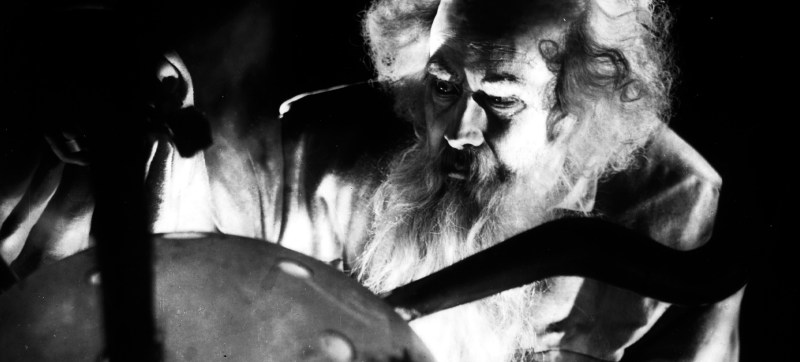
Film review by Jason Day of the silent epic from F.W. Mourn about an old man who sells his soul to the devil in return for his youth. Starring Gosta Ekman and Emil Jannings.

Director: F.W. Murnau. 106 mins. Parufamet (Paramount/MGM & Ufa).

Silent


Continue reading

Argo (2012). Film review of the thriller starring and directed by Ben Affleck

Still from the film Argo (2012)
Standard

Director: Ben Affleck. Warner/Smoke House/GK Films. (15)

THRILLER


Producers: Ben Affleck, George Clooney, Grant Heslov.Writer: Chris Terrio. Camera: Rodrigo Prieto. Music: Alexandre Desplat. Sets: Sharon Seymour.

Ben Affleck, Bryan Cranston, Alan Arkin, John Goodman, Victor Garber, Tate Donovan, Clea DuVall, Scoot McNairy, Rory Cochrane, Christopher Denham, Kerry Bishe, Kyle Chandler, Chris Messina, Bob Gunton, Adrienne Barbeau.

SYNOPSIS

Shortly after the deposed Shah of Iran is granted asylum in the United States, angry crowds in Iran gather frequently outside the American Embassy. When the crowd storms the building, six employees escape and hide in the home of the Canadian Ambassador (Garber) and sit it out. Stumped as how to rescue them from a country in turmoil, the CIA’s Tony Mendez (Affleck) comes up with an idea to fake the production of a science fiction movie (Argo), using a location scouting trip to the Middle East as the cover. Despite initial reservation, Affleck travels to Iran and prepares the embassy staff to leave.

REVIEW

Seeing as Iran, Iraq, or general Middle East-bashing has been de rigueur in Hollywood for many years, it is probably no surprise that this presposterously plotted, ‘all Iranian’s are crazy revolutionaries’ thriller was green lighted.

What is more amazing, almost fantastically beyond the realm of probability, is that the story is actually based on real events. It sounds vaguely like Alexandro Jodorowsky’s (actual) plan to first film Dune in the seventies with Salvador Dali, Orson Welles and Gloria Swanson in the cast. Of course, many years have passed since the events depicted here (1980) and confidential government documents have long since had the dust blown off them, turned into articles (by Joshua Bearman) and now adapted into Hollywood blockbusters (we’ll sidestep the 1981 Canadian TV movie that recounted this story).

A Hollywood film that looks favourably (or at least doesn’t dwell on long since elapsed violence) on Iranian culture and people would be almost too dramatically implausible to ever make it onto a producers desk. This said, Argo is still a very good film from a director/star with considerable talent in creating a slick product.

Affleck looks even more impossibly handsome with a beard like a privet hedge that covers that lantern jaw whilst also managing to look twice as miserable as usual as the hero of the piece. The Mendez character also has suspiciously little to say, rendering him almost mute and one dimensional. We can tell he is a renegade who will disobey orders to get the job done and save the day – who else would a top-flight movie start want to portray?

Perhaps he was mistaking moribund for macho, so the film and leading man only ever roar into life when the top-flight supporting players walk in. Thank heavens for the hilarious Arkin as quick-to-quip Hollywood producer Lester Siegel and Oscar winning make-up maestro John Chambers. These two, armed to the high teeth with expletive strewn Hollywood wit, make a formidable comedic tag-team. They bite at the juicy one-liners that pepper the script with scene-chewing gusto. The plaudits go completely to them. Their frequent cry of “Argo fuck yourself” whenever annoyed is an inspired, smile producing addition.

Affleck fares better on the other side of the camera. Much better in fact. It’s worth noting that despite his huge success as a film star, he has had more artistic success with his work behind the scenes (an Oscar and Golden Globe for best screenplay, Good Will Hunting. His feature directorial debut Gone Baby Gone received good notices across the board) than in front of the lens (we’ll forget the large number of Razzie nominations for worst actor of the year). Despite the broad comedy deployed in the middle of the film (and arguably these are the better sequences. Affleck should try his hand at an outright comedy sometime), the opening embassy storm and later moments of the staff during their escape are staged for all the wound-up tension he could wring out of them. These are scenes made of an escalating, stomach-knotting suspense. Not scary, they play on the apprehension that comes from being completely out of your depth and having to hide in a cellar after dinner. Excellent intuition and understanding for a director that has an immediate effect on the audience.


His Double Life (1933)

Standard

Director: Arthur Hopkins. Atlantic.

COMEDY


Producer: Eddie Dowling. Writers: Arthur Hopkins, Clara Beranger. Camera: Arthur Edeson. Music: Karl Stark, James Hanley. Sets: Joe Schulze, Walter Keller.

Roland Young, Lillian Gish, Montagu Love, Lumsden Hare, Lucy Beaumont, Charles Richman, Oliver Smith, Phillip Tonge, Roland Hogue.

SYNOPSIS

World famous but reclusive artist Priam Farrel (Young) is a tetchy and unsociable individual. So he does little to correct an imperious doctor and his formidable cousin (Love) when they assume he is really the vaguely similar looking valet (Hogue) who has just died, whilst resting in his employer’s bed. Happily assuming this new identity, he encounters a series of problems when he marries a pretty art enthusiast (Gish) and is visited by people from his valet’s past.

REVIEW

In Sunset Boulevard (1950) William Holden’s character said “Sometimes it’s interesting to see just how bad bad writing can be”. Taking this observation holistically, it’s likewise interesting to see just how shitty really shitty film’s can be.

Now of course, to compare Sunset Boulevard with most films is a trifle unfair. To stand it alongside something as uniquely, excruciatingly inadequate as His Double Life could be seen as cinematic bullying (“Yeah, pow! Take that with my three Oscars!”). It could also prove useful, providing a veritable tick-list for any aspiring director about how to very definitely not make a film.

1) USE YOUR TALENT WELL

It almost breaks the heart to see such otherwise hugely talented stars such as Young and Gish mired in such a quagmire of artistic shoddiness.

Young, who would impress later on with memorable comedic turns in David Copperfield (1935, as a greasy Uriah Heep), Topper (1937 and it’s sequel) and The Philadelphia Story (1940) was obviously an actor who needed a good director behind him. Here, he seems to sleepwalk through the proceedings, mumbling and dithering as if he’s lost his mind, then volcanically over-acting at moments that require a deft comic touch. Such a surprise to see him totally lose his way.

Gish almost appears to hold him up at times and it is readily apparent that he starts to relax and enjoy himself when she is on-screen. And thank heavens for this redoubtable actress who, after years of hard slog as a silent movie leading lady and with only one other sound movie behind her manages to turn in a delicate, adorable and perfectly judged performance in terms of vocal delivery, body movement and facial expression. She’s also the only person who provides any injection of humour in what is supposed to be a screwball comedy.

The rest of the performances are, without exception, stiff and unnatural, as if director Hopkins had cue cards stationed around the set and had to use cattle prods to get his performers to use them, making this the slowest paced screwball comedy ever produced.

RESULT – FAIL

2) LOVE YOUR TYPEWRITER UNTIL IT BECOMES ILLEGAL

The main problem with the comedy failing to catch light is a script in which the laughs are few and far between. It doesn’t help too when the dramatic moments and key plot points seem at best contrived and at worst totally illogical.

The odd drollery was bashed out on Hopkins and Beranger’s keys. Gish was given sage advice by her father about financial investments that, as any Brit can tell you, reach down the generations: “Always keep your money in beer, beer will never fail you in England”. What a clever man – he should have done a rewrite to this script.

But fleeting moments such as these don’t make up for the otherwise hopelessly fudged funny bits (Young’s exasperation at his funeral is just odd, the climactic courtroom scene, with the jurors constantly repeating themselves, is baffling).

The dramatic moments that show the writers up include: Gish, after being clearly told who is who between the artist and his valet in a photo, still manages to mix them up (they really don’t look alike; the valet’s instruction with this photo should not have been used), Gish lets Young move in and marry her and share her booze pennies after she’s only known him for a few days.

RESULT – FAIL

3) REMEMBER HITCHCOCK – ‘THE VISUAL IS FIRST…’

The great man followed this up about the oral being supplementary, so he wouldn’t have been completely useful when looking over this film.

None the less, use your camera as if it were the eye of every cinema patron. And film critic. One good shot that encircles the number of an address in a letter, then seamlessly edited to reveal the actual address encircled above a door shows only the genesis of an interesting visual style. Keep going!

RESULT – SEMI-PASS; I’LL ADMIT, YOU’RE HALF-WAY UP THE STAIRS

4) DIRECTORS NEED A FEW QUALITIES – TIMING, PACING, VISUAL SENSE, BALLS ETC

Pretty obvious, but isn’t this why you are being hired for the job at hand? Because you have some innate ability to encourage/cajole/beat people into doing good things in a movie?

Maybe it didn’t help that Hopkins only had one other film under his belt and that was in 1919. Perhaps he was a better hand at directing plays in the American Expressionist theatre, where he staged pieces by Eugene O’Neill amongst others, but his style here is totally off. One moment that sticks in the mind is when Young leaves his house only to met by an assembled ‘mass’ (about 20 people huddled together) outside. He pauses looking astonished for what seems like an eternity, the crowd looks at him, we get his reaction shot again and then he slowly turns and walks back inside. It almost beggars belief that it happens, so thank heavens for internet playback when you can check you have seen the most poorly executed prat-fall in comedies of this period.

RESULT – FAIL (IN EVERY SENSE)


Future movie releases w/e 9 November 2012

Standard

Alps – Yorgos Lanthimos’ follow-up to his decidedly bizarre family tale Dogtooth is another examination of extreme human psychology and relationships. An agency hires people stand-in for the dead people. That is, until one of them starts to exhibit erratic behaviour. The official Artificial Eye website is here. Key cities only.

Aurora – a Romanian man, recently divorced and experiencing problems at work, buys a gun and decides to test it out in this drama from director Cristi Puiu. The New Wave Films website has some more information here. Key cities only.

Grassroots – So there is life after American Pie. Jason Biggs stars as a disillusioned journalist opposite odd-bod political candidate Joel David Moore who likes to dress up as a Polar Bear. Based on the real-life events around a Seattle City Council elections, it is directed by Jake and Maggie Gyllenhall’s dad Stephen. Official site is here. Key cities only.

Here Comes the Boom – Kevin James plays a teacher who takes up martial arts to help raise money for his cash-strapped school in this comedy, co-starring Salma Hayek. Official Sony Pictures site is here. Showing nationwide.

Love Bite  – British Cherry Falls sounding comedy horror in which a Werewolf is preying on virgins living in a British seaside town. Soon, every one is desperate the lose their virginity. Official Ecosse Film’s site is here. Showing nationwide and probably just as well seeing as they missed the Hallowe’en release week.

Mother’s Milk – drama, based on the novel by Edward St. Aubyn that follows an English family over one summer when the mother decides to sell the family home after suffering a stroke. Jack Davenport and Diana Quick star. IMDb has the low-down here. Key cities only.

My Brother the Devil – Already acclaimed at the recent London Film Festival (receiving nominations for best writing, directing and actor for Fady Elsayed), this drama looks at two brothers struggling to survive the London gangland scene as two young, British Arabs. One to watch. Official site is here. Showing at key cities.

People Like Us – Chris Pine returns home to settle his deceased father’s estate and finds he has a grown-up sister he never knew about. Disney drama co-starring Michelle Pfeiffer. The US site is here; being released nationwide.

Ray Harryhausen: Special Effects Titan – there has been an exhibition in London about this man’s fondly remembered stop-motion special effects and a resurgence in interest about his work ever since the two, new Clash of the Titans films were released. This documentary chronicles the career of the man who has done more for the advancement of cinematic special effects that any other artist and features contributions from, amongst others, Peter Jackson and Terry Gilliam. Official site explains more here. Key cities only.

Shady Lady – documentary about the titular WWII bomber. After crash-landing in Northern Australia, a local Aboriginal community helped get the plane flying again. Official site is here, but it’s showing at selected venues only (see their website).

And from Tues 13 November…

Coldplay Live 2012 – as the title describes, filmed action from the band’s recent tour. Official Coldplay site is here.

Son of Sardaar – Bollywood drama following a man who becomes embroiled in a long-running family feud. See IMDb for more.


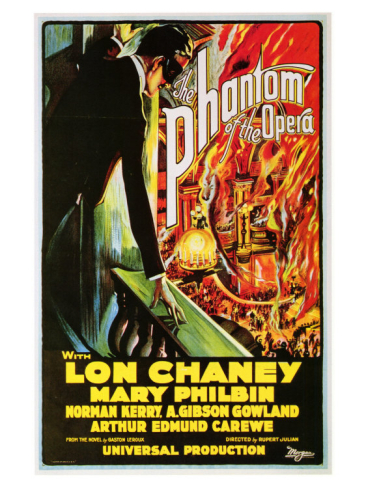
The Phantom of the Opera (1925)

Standard

Director: Rupert Julian. Universal.

SILENT

Producers: Carl Laemmle. Writers: Elliott J. Clawson, Raymond L. Schrock. Camera: Milton Bridenbecker, Virgil Miller, Charles Van Enger. Music: Joseph Carl Briell, Gustav Hinrichs (original). Others at reissue: Sam Perry (1929), Gabriel Thibaudeau, Rick Wakeman (both 1990), Roy Budd (1993), Carl Davis (1996). Sets: Ben Carre.

Lon Chaney, Mary Philbin, Norman Kerry, Arthur Edmund Carewe, Gibson Gowland, John St. Polis, Snitz Edwards, Mary Fabian, Virginia Pearson.

SYNOPSIS

Erik (Chaney) is a former singing star, horribly disfigured now reduced to lurking in the vast underground catacombs and cellars of the Paris Opera House. He nurtures the talent of young chorus girl Christine (Philbin) whom by devious methods, he hopes to place in a production of Faust. He also wishes her to see beyond the mask that hides his tortured face and fall in love with him, but is enraged when she pursues her own love in handsome Raoul (Kerry) against his instructions. He kidnaps her so Raoul and a strange, undercover policeman (Carewe) attempt to rescue her.

REVIEW

Chaney’s second, bug-budget horror blockbuster after The Hunchback of Notre Dame (1923) is set in the same city and eagle-eyed silent movie fans will note that Chaney’s carriage at the end of the film is seen speeding past the facade of Notre Dame cathedral, a little in-joke for contemporary fans.

This is a slow-moving adaption of Gaston Leroux’s famous novel, with a tortuously prolonged opening as the Phantom crawls around a section of his subterranean lair, watched by an Opera orderly. The lack of action isn’t helped by the over-use of letters, constantly passed between characters, to describe action – clunky and effective only in slowing things down more.

Julian quarrelled on set with Chaney and was dismissed at some point during the production, which might explain the slightly unbalanced feel throughout, as if a few more hand than necessary were fingering the clapperboard. Chaney himself directed a few sequences.

Of what remains, there are some giddily enjoyable flourishes, such as the opening that uses a group of silly ballet dancers to set the mystery, as the girls twirl in their tutus around the dank staircases and cellars.

If the unmasking of the phantom is more funny that scary, the eye-catching multi-story sets of the Paris underground that is the phantom’s lair and the Masked Ball, filmed in a beautiful trifle of two-tone colour, more than make up for it. This last scene, lasting only a few precious minutes, would have increased the film’s budget somewhat, so it’s a shame it doesn’t last longer and whomever directed it didn’t have the time to have some more fun with the dancers.

Philbin’s strange, hyper-gesticulatory performance is richly rewarding, she acts as if constantly in a trance (her character is under the spell of her master, at least in her opening scenes). This is a hangover from the overly artificial turns in German films such as The Cabinet of Dr Caligari, but this is one to enjoy, slightly mad, but eye-catching (it helps that she is also extremely pretty).

Chaney seems possessed himself, though it could be as a result of what looks like excruciating prosthetics that push his nose up and give him gross, jagged teeth and a bald pate with lank, greasy hair. Every extreme physical stereotype of ugliness is utilised by Chaney, who designed the make-up.

The script is a typical silent blockbuster type of this period, slightly nonsensical and in dire need of a continuity editor. Christine, after being led by a strange man through the catacombs, talks at length to her master but, only after seeing the coffin he sleeps in, does she twig that this man might be the same person as the Phantom. He calls her mad – clearly having little insight into his own sociopathic tendencies (this is just after he has dropped a hefty chandelier on Paris’ hoi polloi).

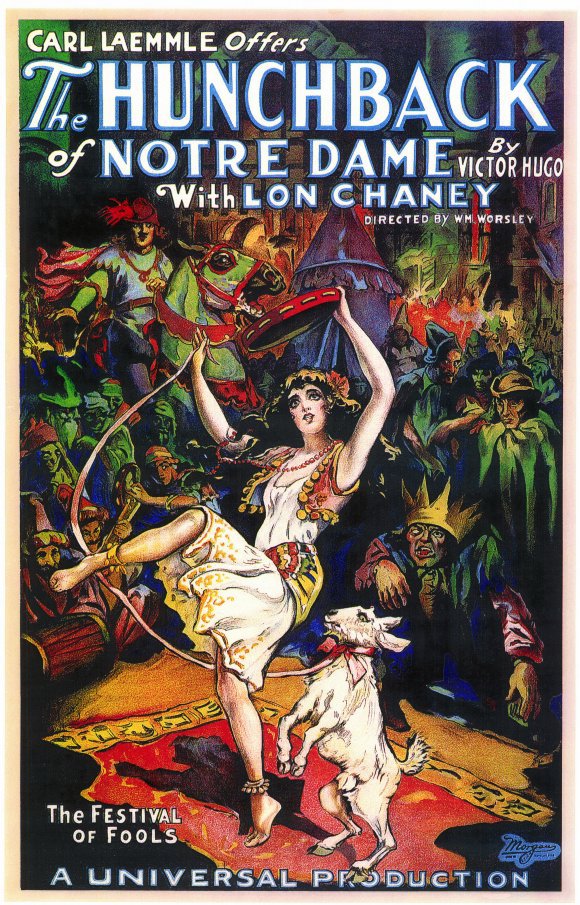
The Hunchback of Notre Dame (1923)

Standard

Director: Wallace Worsley. Universal.

SILENT


Producers: Carl Laemmle, Irving Thalberg. Writer: Edward T. Lowe, Jr. Camera: Robert Newhard. Sets: E.E. Shelley, Sydney Ullman.

Lon Chaney, Patsy Ruth Miller, Norman Kerry, Kate Lester, Winifred Bryson, Nigel De Brulier, Brandon Hurst, Ernest Torrance, Tully Marshall, Harry van Meter, Raymond Hatton.

SYNOPSIS

Paris, 1482: Set against the backdrop of growing public resentment at the laws and dictates of King Louis XI (Marshall), Quasimodo (Chaney) a deformed bell ringer at Notre Dame cathedral falls hopelessly in love with the beautiful Gypsy dancer Esmerelda (Miller). When Esmerelda is tried with the attempted murder of her lover, the soldier Phoebus (Kerry), he attempts to rescue her as revolution erupts beneath his beloved cathedral.

REVIEW

Caution, literary respect and a fair degree of common sense are thrown to the wind in the great grand-daddy of all adaptations of Victor Hugo’s mammoth and largely unexciting romantic epic (were all of those chapters about Gothic architecture really necessary?).

‘The Man of a Thousand Faces’ Chaney headlines as the poor, mis-shapen campanologist, though it is not one of his better turns.

The hasty editing, particularly in the horrifically rushed introductory scenes (possibly down to there being several versions of the film of differing lengths around the world – not uncommon for silent movies) leads to a large amount of information about characters, themes and sub-plots being whisked by the viewer in quick succession. Hugo’s book is a feat for any screen-writer to compress so it is probably not surprising that sections were skipped or skimmed over, but the irritating over use of title cards to sum up whole people and their motivations when this could have been expressed to the camera shows either poor directorial skills on the part of Worsley or nonexistent talent when wielding the scissors in the cutting room.

We also miss out on those subtle, telling aspects of the story, such as Quasimodo’s dependent relationship with his master Frollo, but the sound era would help rectify such things.

Another thing the sound era would help clear up, is that implausibility that silent movies tended to lean toward, those moments that don’t really make sense. Quasimodo, after being described as totally deaf and half blind, is immediately seen spying on the crowd assembled a hundred feet below and is able to pick out the people insulting him, as the bells of the cathedral ring behind him.

One thing Worlsey really misses a trick with are these crowd scenes. Later versions, including Disney’s animated go in 1996, use the crowd as an integral part of the story, as if it is a living organism, swelling en masse at various points with a fluid motion. Despite the alleged 3,500 extras used in this film, these moments seem empty, slightly scrappy, as if the man with the megaphone in his hand is whispering in the wrong direction.

On the acting front, and again to be democratic, it is difficult to see whether this a poor choice of cast (Miller and Kerry were never top flight actors of this period) or if Worsley was unable to elicit more innovative, subtle performances from his ensemble. Chaney is supposed to be the man of the moment here but his turn is on the edge of over melodramatic. He never really evinces true sympathy, though it doesn’t help that the titles spell him out as being something of a bad one, consumed with hatred for the citizens of Paris who despise his deformity (the novel and subsequent adaptations do not dwell on this).

There are some superb displays of villainy though; De Brulier  as Don Claudio (Claude Frollo in the novel) is genuinely creepy and Torrance proves why he became one of the most famous of silent bad guys as Clopin, King of Thieves.

Pity poor Kerry though, who would spend most of the next six years playing second fiddle to Chaney (he would do so again in The Phantom of the Opera two years later and The Unknown in 1927).

Universal provide the means to an end to recreate Paris with a lavish eye, including the quick glimpses we get of the fetid underground sewers and Court of Miracles. This is described as a place where the blind see and the lame walk, rather like a medieval Atos assessment centre.