Film review by Jason Day of the silent epic from F.W. Mourn about an old man who sells his soul to the devil in return for his youth. Starring Gosta Ekman and Emil Jannings.
Director: F.W. Murnau. 106 mins. Parufamet (Paramount/MGM & Ufa).
Silent


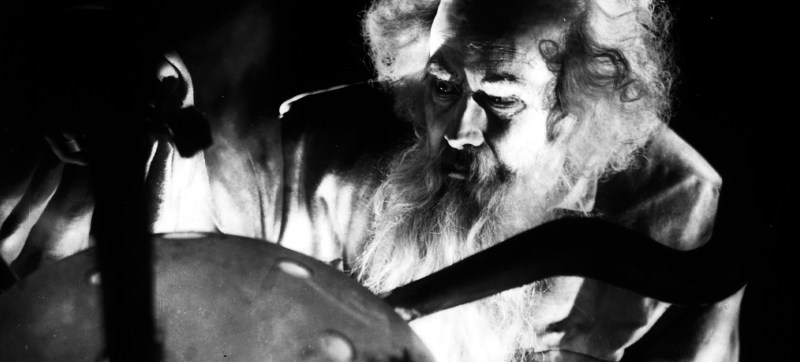
Film review by Jason Day of the silent epic from F.W. Mourn about an old man who sells his soul to the devil in return for his youth. Starring Gosta Ekman and Emil Jannings.
Director: F.W. Murnau. 106 mins. Parufamet (Paramount/MGM & Ufa).
Silent

Director: Ben Affleck. Warner/Smoke House/GK Films. (15)
THRILLER

Producers: Ben Affleck, George Clooney, Grant Heslov.Writer: Chris Terrio. Camera: Rodrigo Prieto. Music: Alexandre Desplat. Sets: Sharon Seymour.
Ben Affleck, Bryan Cranston, Alan Arkin, John Goodman, Victor Garber, Tate Donovan, Clea DuVall, Scoot McNairy, Rory Cochrane, Christopher Denham, Kerry Bishe, Kyle Chandler, Chris Messina, Bob Gunton, Adrienne Barbeau.
SYNOPSIS
Shortly after the deposed Shah of Iran is granted asylum in the United States, angry crowds in Iran gather frequently outside the American Embassy. When the crowd storms the building, six employees escape and hide in the home of the Canadian Ambassador (Garber) and sit it out. Stumped as how to rescue them from a country in turmoil, the CIA’s Tony Mendez (Affleck) comes up with an idea to fake the production of a science fiction movie (Argo), using a location scouting trip to the Middle East as the cover. Despite initial reservation, Affleck travels to Iran and prepares the embassy staff to leave.
REVIEW
Seeing as Iran, Iraq, or general Middle East-bashing has been de rigueur in Hollywood for many years, it is probably no surprise that this presposterously plotted, ‘all Iranian’s are crazy revolutionaries’ thriller was green lighted.
What is more amazing, almost fantastically beyond the realm of probability, is that the story is actually based on real events. It sounds vaguely like Alexandro Jodorowsky’s (actual) plan to first film Dune in the seventies with Salvador Dali, Orson Welles and Gloria Swanson in the cast. Of course, many years have passed since the events depicted here (1980) and confidential government documents have long since had the dust blown off them, turned into articles (by Joshua Bearman) and now adapted into Hollywood blockbusters (we’ll sidestep the 1981 Canadian TV movie that recounted this story).
A Hollywood film that looks favourably (or at least doesn’t dwell on long since elapsed violence) on Iranian culture and people would be almost too dramatically implausible to ever make it onto a producers desk. This said, Argo is still a very good film from a director/star with considerable talent in creating a slick product.
Affleck looks even more impossibly handsome with a beard like a privet hedge that covers that lantern jaw whilst also managing to look twice as miserable as usual as the hero of the piece. The Mendez character also has suspiciously little to say, rendering him almost mute and one dimensional. We can tell he is a renegade who will disobey orders to get the job done and save the day – who else would a top-flight movie start want to portray?
Perhaps he was mistaking moribund for macho, so the film and leading man only ever roar into life when the top-flight supporting players walk in. Thank heavens for the hilarious Arkin as quick-to-quip Hollywood producer Lester Siegel and Oscar winning make-up maestro John Chambers. These two, armed to the high teeth with expletive strewn Hollywood wit, make a formidable comedic tag-team. They bite at the juicy one-liners that pepper the script with scene-chewing gusto. The plaudits go completely to them. Their frequent cry of “Argo fuck yourself” whenever annoyed is an inspired, smile producing addition.
Affleck fares better on the other side of the camera. Much better in fact. It’s worth noting that despite his huge success as a film star, he has had more artistic success with his work behind the scenes (an Oscar and Golden Globe for best screenplay, Good Will Hunting. His feature directorial debut Gone Baby Gone received good notices across the board) than in front of the lens (we’ll forget the large number of Razzie nominations for worst actor of the year). Despite the broad comedy deployed in the middle of the film (and arguably these are the better sequences. Affleck should try his hand at an outright comedy sometime), the opening embassy storm and later moments of the staff during their escape are staged for all the wound-up tension he could wring out of them. These are scenes made of an escalating, stomach-knotting suspense. Not scary, they play on the apprehension that comes from being completely out of your depth and having to hide in a cellar after dinner. Excellent intuition and understanding for a director that has an immediate effect on the audience.

Director: Arthur Hopkins. Atlantic.
COMEDY

Producer: Eddie Dowling. Writers: Arthur Hopkins, Clara Beranger. Camera: Arthur Edeson. Music: Karl Stark, James Hanley. Sets: Joe Schulze, Walter Keller.
Roland Young, Lillian Gish, Montagu Love, Lumsden Hare, Lucy Beaumont, Charles Richman, Oliver Smith, Phillip Tonge, Roland Hogue.
SYNOPSIS
World famous but reclusive artist Priam Farrel (Young) is a tetchy and unsociable individual. So he does little to correct an imperious doctor and his formidable cousin (Love) when they assume he is really the vaguely similar looking valet (Hogue) who has just died, whilst resting in his employer’s bed. Happily assuming this new identity, he encounters a series of problems when he marries a pretty art enthusiast (Gish) and is visited by people from his valet’s past.
REVIEW
In Sunset Boulevard (1950) William Holden’s character said “Sometimes it’s interesting to see just how bad bad writing can be”. Taking this observation holistically, it’s likewise interesting to see just how shitty really shitty film’s can be.
Now of course, to compare Sunset Boulevard with most films is a trifle unfair. To stand it alongside something as uniquely, excruciatingly inadequate as His Double Life could be seen as cinematic bullying (“Yeah, pow! Take that with my three Oscars!”). It could also prove useful, providing a veritable tick-list for any aspiring director about how to very definitely not make a film.
1) USE YOUR TALENT WELL
It almost breaks the heart to see such otherwise hugely talented stars such as Young and Gish mired in such a quagmire of artistic shoddiness.
Young, who would impress later on with memorable comedic turns in David Copperfield (1935, as a greasy Uriah Heep), Topper (1937 and it’s sequel) and The Philadelphia Story (1940) was obviously an actor who needed a good director behind him. Here, he seems to sleepwalk through the proceedings, mumbling and dithering as if he’s lost his mind, then volcanically over-acting at moments that require a deft comic touch. Such a surprise to see him totally lose his way.
Gish almost appears to hold him up at times and it is readily apparent that he starts to relax and enjoy himself when she is on-screen. And thank heavens for this redoubtable actress who, after years of hard slog as a silent movie leading lady and with only one other sound movie behind her manages to turn in a delicate, adorable and perfectly judged performance in terms of vocal delivery, body movement and facial expression. She’s also the only person who provides any injection of humour in what is supposed to be a screwball comedy.
The rest of the performances are, without exception, stiff and unnatural, as if director Hopkins had cue cards stationed around the set and had to use cattle prods to get his performers to use them, making this the slowest paced screwball comedy ever produced.
RESULT – FAIL
2) LOVE YOUR TYPEWRITER UNTIL IT BECOMES ILLEGAL
The main problem with the comedy failing to catch light is a script in which the laughs are few and far between. It doesn’t help too when the dramatic moments and key plot points seem at best contrived and at worst totally illogical.
The odd drollery was bashed out on Hopkins and Beranger’s keys. Gish was given sage advice by her father about financial investments that, as any Brit can tell you, reach down the generations: “Always keep your money in beer, beer will never fail you in England”. What a clever man – he should have done a rewrite to this script.
But fleeting moments such as these don’t make up for the otherwise hopelessly fudged funny bits (Young’s exasperation at his funeral is just odd, the climactic courtroom scene, with the jurors constantly repeating themselves, is baffling).
The dramatic moments that show the writers up include: Gish, after being clearly told who is who between the artist and his valet in a photo, still manages to mix them up (they really don’t look alike; the valet’s instruction with this photo should not have been used), Gish lets Young move in and marry her and share her booze pennies after she’s only known him for a few days.
RESULT – FAIL
3) REMEMBER HITCHCOCK – ‘THE VISUAL IS FIRST…’
The great man followed this up about the oral being supplementary, so he wouldn’t have been completely useful when looking over this film.
None the less, use your camera as if it were the eye of every cinema patron. And film critic. One good shot that encircles the number of an address in a letter, then seamlessly edited to reveal the actual address encircled above a door shows only the genesis of an interesting visual style. Keep going!
RESULT – SEMI-PASS; I’LL ADMIT, YOU’RE HALF-WAY UP THE STAIRS
4) DIRECTORS NEED A FEW QUALITIES – TIMING, PACING, VISUAL SENSE, BALLS ETC
Pretty obvious, but isn’t this why you are being hired for the job at hand? Because you have some innate ability to encourage/cajole/beat people into doing good things in a movie?
Maybe it didn’t help that Hopkins only had one other film under his belt and that was in 1919. Perhaps he was a better hand at directing plays in the American Expressionist theatre, where he staged pieces by Eugene O’Neill amongst others, but his style here is totally off. One moment that sticks in the mind is when Young leaves his house only to met by an assembled ‘mass’ (about 20 people huddled together) outside. He pauses looking astonished for what seems like an eternity, the crowd looks at him, we get his reaction shot again and then he slowly turns and walks back inside. It almost beggars belief that it happens, so thank heavens for internet playback when you can check you have seen the most poorly executed prat-fall in comedies of this period.
RESULT – FAIL (IN EVERY SENSE)

Alps – Yorgos Lanthimos’ follow-up to his decidedly bizarre family tale Dogtooth is another examination of extreme human psychology and relationships. An agency hires people stand-in for the dead people. That is, until one of them starts to exhibit erratic behaviour. The official Artificial Eye website is here. Key cities only.
Aurora – a Romanian man, recently divorced and experiencing problems at work, buys a gun and decides to test it out in this drama from director Cristi Puiu. The New Wave Films website has some more information here. Key cities only.
Grassroots – So there is life after American Pie. Jason Biggs stars as a disillusioned journalist opposite odd-bod political candidate Joel David Moore who likes to dress up as a Polar Bear. Based on the real-life events around a Seattle City Council elections, it is directed by Jake and Maggie Gyllenhall’s dad Stephen. Official site is here. Key cities only.
Here Comes the Boom – Kevin James plays a teacher who takes up martial arts to help raise money for his cash-strapped school in this comedy, co-starring Salma Hayek. Official Sony Pictures site is here. Showing nationwide.
Love Bite – British Cherry Falls sounding comedy horror in which a Werewolf is preying on virgins living in a British seaside town. Soon, every one is desperate the lose their virginity. Official Ecosse Film’s site is here. Showing nationwide and probably just as well seeing as they missed the Hallowe’en release week.
Mother’s Milk – drama, based on the novel by Edward St. Aubyn that follows an English family over one summer when the mother decides to sell the family home after suffering a stroke. Jack Davenport and Diana Quick star. IMDb has the low-down here. Key cities only.
My Brother the Devil – Already acclaimed at the recent London Film Festival (receiving nominations for best writing, directing and actor for Fady Elsayed), this drama looks at two brothers struggling to survive the London gangland scene as two young, British Arabs. One to watch. Official site is here. Showing at key cities.
People Like Us – Chris Pine returns home to settle his deceased father’s estate and finds he has a grown-up sister he never knew about. Disney drama co-starring Michelle Pfeiffer. The US site is here; being released nationwide.
Ray Harryhausen: Special Effects Titan – there has been an exhibition in London about this man’s fondly remembered stop-motion special effects and a resurgence in interest about his work ever since the two, new Clash of the Titans films were released. This documentary chronicles the career of the man who has done more for the advancement of cinematic special effects that any other artist and features contributions from, amongst others, Peter Jackson and Terry Gilliam. Official site explains more here. Key cities only.
Shady Lady – documentary about the titular WWII bomber. After crash-landing in Northern Australia, a local Aboriginal community helped get the plane flying again. Official site is here, but it’s showing at selected venues only (see their website).
And from Tues 13 November…
Coldplay Live 2012 – as the title describes, filmed action from the band’s recent tour. Official Coldplay site is here.
Son of Sardaar – Bollywood drama following a man who becomes embroiled in a long-running family feud. See IMDb for more.
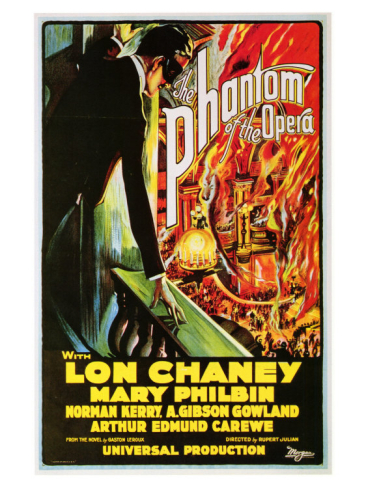
Director: Rupert Julian. Universal.
SILENT

Producers: Carl Laemmle. Writers: Elliott J. Clawson, Raymond L. Schrock. Camera: Milton Bridenbecker, Virgil Miller, Charles Van Enger. Music: Joseph Carl Briell, Gustav Hinrichs (original). Others at reissue: Sam Perry (1929), Gabriel Thibaudeau, Rick Wakeman (both 1990), Roy Budd (1993), Carl Davis (1996). Sets: Ben Carre.
Lon Chaney, Mary Philbin, Norman Kerry, Arthur Edmund Carewe, Gibson Gowland, John St. Polis, Snitz Edwards, Mary Fabian, Virginia Pearson.
SYNOPSIS
Erik (Chaney) is a former singing star, horribly disfigured now reduced to lurking in the vast underground catacombs and cellars of the Paris Opera House. He nurtures the talent of young chorus girl Christine (Philbin) whom by devious methods, he hopes to place in a production of Faust. He also wishes her to see beyond the mask that hides his tortured face and fall in love with him, but is enraged when she pursues her own love in handsome Raoul (Kerry) against his instructions. He kidnaps her so Raoul and a strange, undercover policeman (Carewe) attempt to rescue her.
REVIEW
Chaney’s second, bug-budget horror blockbuster after The Hunchback of Notre Dame (1923) is set in the same city and eagle-eyed silent movie fans will note that Chaney’s carriage at the end of the film is seen speeding past the facade of Notre Dame cathedral, a little in-joke for contemporary fans.
This is a slow-moving adaption of Gaston Leroux’s famous novel, with a tortuously prolonged opening as the Phantom crawls around a section of his subterranean lair, watched by an Opera orderly. The lack of action isn’t helped by the over-use of letters, constantly passed between characters, to describe action – clunky and effective only in slowing things down more.
Julian quarrelled on set with Chaney and was dismissed at some point during the production, which might explain the slightly unbalanced feel throughout, as if a few more hand than necessary were fingering the clapperboard. Chaney himself directed a few sequences.
Of what remains, there are some giddily enjoyable flourishes, such as the opening that uses a group of silly ballet dancers to set the mystery, as the girls twirl in their tutus around the dank staircases and cellars.
If the unmasking of the phantom is more funny that scary, the eye-catching multi-story sets of the Paris underground that is the phantom’s lair and the Masked Ball, filmed in a beautiful trifle of two-tone colour, more than make up for it. This last scene, lasting only a few precious minutes, would have increased the film’s budget somewhat, so it’s a shame it doesn’t last longer and whomever directed it didn’t have the time to have some more fun with the dancers.
Philbin’s strange, hyper-gesticulatory performance is richly rewarding, she acts as if constantly in a trance (her character is under the spell of her master, at least in her opening scenes). This is a hangover from the overly artificial turns in German films such as The Cabinet of Dr Caligari, but this is one to enjoy, slightly mad, but eye-catching (it helps that she is also extremely pretty).
Chaney seems possessed himself, though it could be as a result of what looks like excruciating prosthetics that push his nose up and give him gross, jagged teeth and a bald pate with lank, greasy hair. Every extreme physical stereotype of ugliness is utilised by Chaney, who designed the make-up.
The script is a typical silent blockbuster type of this period, slightly nonsensical and in dire need of a continuity editor. Christine, after being led by a strange man through the catacombs, talks at length to her master but, only after seeing the coffin he sleeps in, does she twig that this man might be the same person as the Phantom. He calls her mad – clearly having little insight into his own sociopathic tendencies (this is just after he has dropped a hefty chandelier on Paris’ hoi polloi).
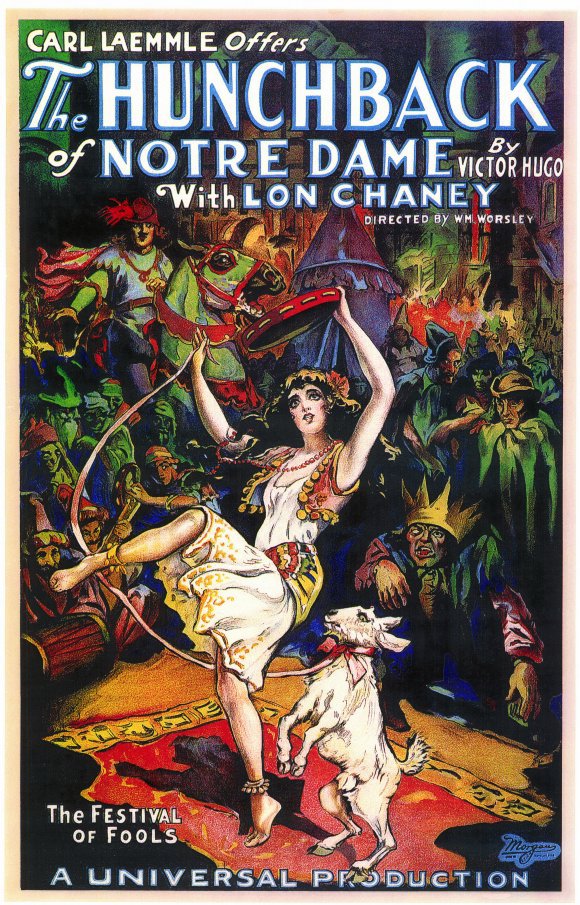
Director: Wallace Worsley. Universal.
SILENT

Producers: Carl Laemmle, Irving Thalberg. Writer: Edward T. Lowe, Jr. Camera: Robert Newhard. Sets: E.E. Shelley, Sydney Ullman.
Lon Chaney, Patsy Ruth Miller, Norman Kerry, Kate Lester, Winifred Bryson, Nigel De Brulier, Brandon Hurst, Ernest Torrance, Tully Marshall, Harry van Meter, Raymond Hatton.
SYNOPSIS
Paris, 1482: Set against the backdrop of growing public resentment at the laws and dictates of King Louis XI (Marshall), Quasimodo (Chaney) a deformed bell ringer at Notre Dame cathedral falls hopelessly in love with the beautiful Gypsy dancer Esmerelda (Miller). When Esmerelda is tried with the attempted murder of her lover, the soldier Phoebus (Kerry), he attempts to rescue her as revolution erupts beneath his beloved cathedral.
REVIEW
Caution, literary respect and a fair degree of common sense are thrown to the wind in the great grand-daddy of all adaptations of Victor Hugo’s mammoth and largely unexciting romantic epic (were all of those chapters about Gothic architecture really necessary?).
‘The Man of a Thousand Faces’ Chaney headlines as the poor, mis-shapen campanologist, though it is not one of his better turns.
The hasty editing, particularly in the horrifically rushed introductory scenes (possibly down to there being several versions of the film of differing lengths around the world – not uncommon for silent movies) leads to a large amount of information about characters, themes and sub-plots being whisked by the viewer in quick succession. Hugo’s book is a feat for any screen-writer to compress so it is probably not surprising that sections were skipped or skimmed over, but the irritating over use of title cards to sum up whole people and their motivations when this could have been expressed to the camera shows either poor directorial skills on the part of Worsley or nonexistent talent when wielding the scissors in the cutting room.
We also miss out on those subtle, telling aspects of the story, such as Quasimodo’s dependent relationship with his master Frollo, but the sound era would help rectify such things.
Another thing the sound era would help clear up, is that implausibility that silent movies tended to lean toward, those moments that don’t really make sense. Quasimodo, after being described as totally deaf and half blind, is immediately seen spying on the crowd assembled a hundred feet below and is able to pick out the people insulting him, as the bells of the cathedral ring behind him.
One thing Worlsey really misses a trick with are these crowd scenes. Later versions, including Disney’s animated go in 1996, use the crowd as an integral part of the story, as if it is a living organism, swelling en masse at various points with a fluid motion. Despite the alleged 3,500 extras used in this film, these moments seem empty, slightly scrappy, as if the man with the megaphone in his hand is whispering in the wrong direction.
On the acting front, and again to be democratic, it is difficult to see whether this a poor choice of cast (Miller and Kerry were never top flight actors of this period) or if Worsley was unable to elicit more innovative, subtle performances from his ensemble. Chaney is supposed to be the man of the moment here but his turn is on the edge of over melodramatic. He never really evinces true sympathy, though it doesn’t help that the titles spell him out as being something of a bad one, consumed with hatred for the citizens of Paris who despise his deformity (the novel and subsequent adaptations do not dwell on this).
There are some superb displays of villainy though; De Brulier as Don Claudio (Claude Frollo in the novel) is genuinely creepy and Torrance proves why he became one of the most famous of silent bad guys as Clopin, King of Thieves.
Pity poor Kerry though, who would spend most of the next six years playing second fiddle to Chaney (he would do so again in The Phantom of the Opera two years later and The Unknown in 1927).
Universal provide the means to an end to recreate Paris with a lavish eye, including the quick glimpses we get of the fetid underground sewers and Court of Miracles. This is described as a place where the blind see and the lame walk, rather like a medieval Atos assessment centre.

Just in time for Halloween tomorrow, the Calgary Sun helpfully categorises the main types of horror movies and the top movies within these sub-genres, including notable Canadian products.
The Den of Geek site also has it’s own, top 15 Halloween themed movies you might want to check out. Some of the choices are distinctly odd, as one would expect from this distinctly individual site (Mean Girls? Although Lindsay Lohan’s career is pretty scary these days).
And continuing the subject of scary movies, horror films can shock you thin! This Guardian article reports on a study that has shown people who watch horror movies burn more calories than when watching other genres (and you thought Ben Hur was gruelling). Forget the science (not all that ground-shaking, it seems) and check out the top 10 list.
Interesting feature in The Metro about how a community in Manchester have set up their own cinema in an abandoned working men’s club…and seen it thrive.
Saw this and thought it definitely worth airing as this local cinema in Walthamstow is very near to where I live. A big local campaign has been generated to help save an old cinema. The work continues. For more information about the trust and it’s work, visit their site here.
The Guardian (again!) talks to Nigerian director Kunle Afolayan about his career and ‘The New Nollywood’ that is emerging in African cinema. As well as just profiling this director, the article takes in how Nigerian cinema, faced with a lack of native outlets (only 10 mainstream cinemas are in the whole country!), has to think outside the box for success.
And the ultimate Halloween movie story – Tom Cruise hints at more Mission: Impossible films. The horror, the horror…

Call Me Kuchu – David Kato, Uganda’s first openly gay man, is someone of insurmountable courage and dedication. This important documentary highlights his battle to overturn political legislation in his home country that would see the death sentence imposed on gay men with HIV and possible prison sentences for people who do not ‘shop’ gays and lesbians to the authorities. Official site has the low-down, including screenings (key cities only).
Excision – as one would expect with any film associated with John Waters (here, only appearing in front of the camera), this is a strange sounding addition to the Halloween line-up. This horror sees a High School student Annalynne McCord dissecting road-kill for fun and fantasising about killing her peers. Sounds like a hoot; official site is here. Key cities only.
For A Good Time, Call… Former frenemies Ari Graynor and Laurie Miller start a phone sex line to make ends meet in this pink and frothy looking comedy. Frustratingly awkward to access further details (you are asked to submit contact details in order to watch the trailer on the website), so best to go straight to Facebook. Showing all over the UK.
Keep the Lights On – drama that follows two young gay men through a decade long relationship, with the highs and lows of a life marked by compulsive behaviour fuelled by drugs and sex. Trumpted in a recent Guardian article about the start of ‘real’ gay cinema. Official site is here. Key cities only.
Luv Shuv Tey Chicken Khurana – Bollywood drama in which a young man who travelled to London to become a success, but is now on the run from a UK gangster, has to travel home and pretend not to have failed. IMDb has more detail. Key cities only.
The Master – much touted for Oscar glory, this is a thinly veiled biopic about the establishment of the church of Scientology and follows its founder (Philip Seymour Hoffman) as he plies his bible across the states, with a volatile war veteran drifter (Jaquin Phoenix) going along. Good reviews (Guardian profile here) and the fact it has freaked Tom Cruise out mark this out as one to watch. Showing nationwide from 16 Nov.
Rust and Bone – drama about the bond between a Killer Whale trainer (Marion Cotillard) and a young man (Matthias Schoenaerts) who has left Belgium to live with his sister and support his young son. It won best film at the recent BFI London Film Festival. More info is here on IMDb. Showing all over the UK.
The Shining – a post-Halloween dusting off for Stanley Kubrick’s chillingly empty horror with Jack Nicholson. Showing at key cities only.
Tempest – drama documentary that follows young Londoners as they struggle to stage a version of Shakespeare’s The Tempest, their story unfolding alongside of that of Prospero’s. Official site is here and includes screening details.
And on Tuesday 6…
East End Babylon – Richard England’s rockumentary charts the story of group Cockney Rejects but incorporates the history of the East End over more than a hundred years, including last year’s summer riots (the reason behind this being pulled from TV schedules at the time). Key cities only and official site is here.
And on Wednesday 7…
Argo – only real life can be stranger than Hollywood real life. Ben Affleck stars in this caper about the apparently true life effort to rescue a small group of US Embassy staff from Iran in the seventies…by posing as a fake film company trying to make a sic-fi epic. More info on Warner’s UK site.
The Sapphires – Chris O’Dowd (the nice cop in Bridesmaids) stars as an inspirational music manager who takes a group of girls from a poor Aboriginal mission on Australia and puts them on the world stage. Hasn’t there been enough soul girl group dramas already? Official site is here.
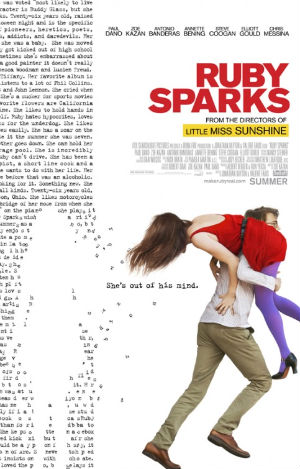
Directors: Jonathan Dayton, Valerie Faris. Bona Fide/Fox Searchlight
DRAMA
Producers: Albert Berger, Ron Yerxa. Writer: Zoe Kazan. Camera: Matthew Libatique. Music: Nick Urata. Sets: Alexander Wei.
Paul Dano, Zoe Kazan, Chris Messina, Annette Bening, Antonio Banderas, Aasif Mandvi, Steve Coogan, Elliott Gould, Toni Trucks, Deborah Ann Woll.
SYNOPSIS
Calvin (Dano) is a shy and retiring novelist who has produced only one book in his entire career, hugely successful and fondly remembered by a generation, thus ensuring he never needs to work again. Then one day his latest creation, a character called Ruby (Kazan), suddenly comes to life as his real-life girlfriend. Much to his delight, he finds that by altering her mood and feelings on paper causes corresponding changes in the real girl. But his joy at manipulating her into always being the perfect woman is short-lived.
REVIEW
Fun and frequently funny comedy drama, from the same directors behind the charming Little Miss Sunshine, shows how far you can go with a little sparky imagination.
A lot, however, rests on the charm of the performances and Ruby Sparks is a film that hits the home run in every performance, with something unique to savour from each. Coogan’s rival writer is a lesser talent seething with almost unspoken jealousy for his younger counterpart, sleeping with Dano’s girlfriends out of spite. Messina is a delight as Dano’s hen-pecked brother who encourages him to change his girlfriend frequently, if for nothing more than he might get laid more often. And better. Gould’s patient shrink is presented as a perfect balancing act to Dano’s neuroticism. Bening (whose character, Gertrude, seems to echo Hamlet’s character for marrying another man after the death of the male lead’s father) and Banderas chill out as Dano’s free spirit folk whose garden is their house.
The leads are a very appealing double-act; Dano, with meek and passive aggressive voice and body language, seems like the most harrassed of writers block sufferers, a collection of twitches, squeaky outbursts and untrusting looks. His character is a sweet guy, but also repellant as he lives his life and relationships through ink and paper, the ultimate sexual controller of women. The only lasting relationship he has is with his typewriter and even that is a let down, helping him produce no more than one good book. That he squeezes comedy juice out of the role for everything it’s worth is all the more impressive.
Kazan has given herself what is the most interesting piece dramatically, with violent, sudden and exhausting mood changes, a literal bipolar character. She is hard to keep up with much to less to enjoy but she has our sympathies, being no more than a puppet on an ink ribbon.
Kazan’s script leads to some split thinking though. On the one hand, it is an energetic, thoughtful, clever piece with some unforgettable dramatic moments a writer should be proud of. The example that lingers after leaving the theatre is the crazy, mad love scene when Dano, frustrated that his constantly evolving work on paper is only making Ruby unbalanced and unpredictable in real life, bashes out a series of increasingly bizarre behaviours on his trusty typewriter for her to act out.
One of these actions highlights the problem, on the other side of the coin, with the writing. Ruby constantly refers to the writer as “genius”. This is how other people refer to him, almost as shorthand to move the conversation away from this difficult person and on to something easier to discuss. Star Kazan is the writer too and near the end of the film, another character she plays states that Dano’s new book is pretentious. This script could be seen as overly precious clever-dickness, as if the writer has descended into their own literary frenzy of self congratulation. None the less, she can still write some great scenes so let’s hope we get more from her.
I caught the reconstructed silent comedy The Spanish Dancer (1923) at the London Film Festival on Sunday. According to the Chicago Tribune figures show that attendance at the festival’s screenings this year across London topped 149,000. The BFi’s box office tills must have rung until meltdown. Read the summation of the festival, which closed with Mike Newell’s adaptation of Great Expectations here.
A clever idea from the people who gave you Secret Cinema – The Secret Hotel. Instead of just turning up and seeing a randomn movie in a mystery location, you can now stay on at a hotel that screens it (also kept secret), themed to tie in with the film and with staff in character. The Guardian has more information here; the Secret Cinema website is here.
The movie awards season is off to a very early start. The Hollywood Awards (the what? It’s been going for 16 years people, keep up!), held last week, is by dint of date the first in a long season of international award events. Among the winners, veteran actor Dustin Hoffman scooped best breakthrough director for his directorial debut Quartet.
Incisive, politico-cinematic critique of American cinema’s continued demonisation of Iran and Iranian people, in order to prop up the safe and secure ideology of Uncle Sam? Or slightly repetitive, quasi-intellectual rant with an impenetrable vocabulary that serves only to underline the author’s ‘higher’ intellect? You decide, in this none the less interesting and well referenced piece from Middle East online.
 CineSocialUK