Greed (1924)

Standard

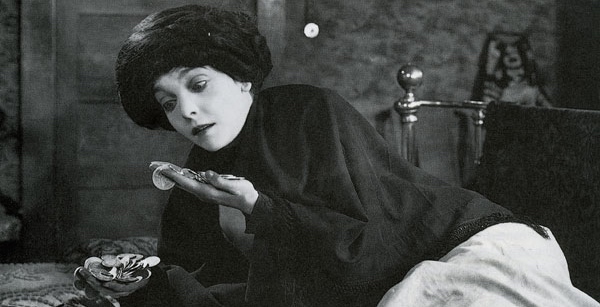
Film review of the silent movie epic directed by Erich von Stroheim starring Zasu Pitts as a woman who wins a small fortune on a lottery and whose life with her simple minded dentist husband McTeague (Gibson Gowland) and former beau Marcus (Jean Hersholt) descends into miserly obsession, madness and murder as she tries to retain every single cent of her winnings.

To like this review, comment on it or to follow this blog, please scroll to the bottom of the page.

Director: Erich von Stroheim. MGM, 239 minutes. (PG)

Silent

Continue reading

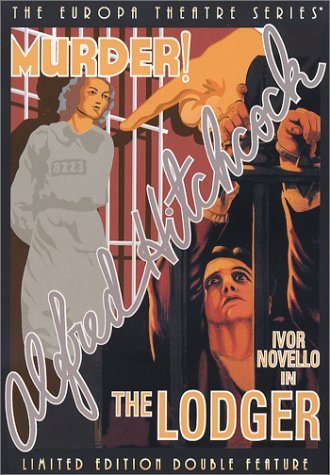
The Lodger: A Story of the London Fog (1926)

Standard

Film review of the silent Alfred Hitchcock film starring Ivor Novello.

Director: Alfred Hitchcock. Gainsborough/Carlyle Blackwell.

SILENT


Cast & credits

Producers: Michael Balcon, Carlyle Blackwell.
Writers: Alfred Hitchcock, Eliot Stannard.
Camera: Gaetano di di Ventimiglia, Hal Young.
Music: Ashley Irwin (1999 reissue).
Sets:
C. Wilfred Arnold, C. Bertram Evans.

Ivor Novello, June, Marie Ault, Arthur Chesney, Malcolm Keen.

SYNOPSIS

There has been a series of brutal murders, in which the victims are all blonde women. Young Daisy’s (June) parent’s take in a mysterious and creepy, but handsome, young lodger (Novello). He has a habit of being absent from the house during the time that each new victim is slain. But pretty, golden haired Daisy is drawn to him and spends more time in his rooms, even as her mother (Ault) and her ex-boyfriend, a policeman (Keen) start to gather circumstantial evidence against him.

REVIEW

Jack the Ripper has long held a grip on British criminology and the public fascination with crime ever since he committed his atrocities against women in the 1890’s.

Within less than a year, this still unknown assailant had killed five prostitutes in the east end of London. Despite a committed police effort and local uprising at their perceived inefficiencies, he was never caught. To this day, he hasn’t been conclusively identified, so his presence looms over us still somewhat.

In this film, based very loosely on the case, a young director who would cast his own, rather portly, shadow across international cinema, lets us see the flip side of the coin in the Ripper saga.

Known to most audiences by the first part of it’s title (for a ‘story of the London fog’, there is precious little of that in any part of the film), this early offering from Hitchcock offers an intriguing taster of what he would deliver to film audiences over the next half century.

On reflection, and seen as a whole piece, The Lodger is not as arresting as Hitch’s other silent films (Blackmail being an obvious example). This film can perhaps be seen as Hitchcock groping his way toward the full narrative and stylistic mise en scene that would later be so easily recognisable as ‘Hitchcockian’.

This furtive fumbling in the cinematic darkness might explain The Lodger‘s plodding pace that is a major detraction. For less than an hour and a half, the time seems to drag. The relative lack of the key ingredients that make Hitch’s films uniquely his compounds this feeling further.

Never the less, there are some intimate, sexually charged shots as Hitch and his cameraman catch Novello and June in glistening soft-focus close-ups as they kiss for the first time. His taste for expressionistic visual flourishes abounds (Daisy’s mother in her starkly designed room; the silhouette of the window frames that projects a cross on Novello’s face when he first moves in).

Daisy’s nosey and perceptive mother (Ault), who cottons on to Novello’s weirdness before the coppers, elaborates on Hitch’s obvious mistrust of the police and capture, that would be most noticeable in later products, such as The Wrong Man and North by Northwest.

Novello may have been the darling of London stage and society at this time but his histrionic, fey turn is as suspect as his character (for a man attempting to go undercover, he blows his cover with creepy Nosferatu body language stares before he’s even stepped foot inside the front door).

Future movie releases…w/e 14 September 2012

Standard

About Elly – Iranian drama about a young woman who, whilst trying to match-make on a trip with friends, innocently sets about a series of events with a shocking conclusion. The Axiom Films website has more here. Showing in key UK cities.

Anton Corbijn: Inside Out – Dutch language docu that follows the titular artist as he travels the world. There is an official site here for those who read Dutch but IMDb might be most people’s safer bet for more details. Showing at the Curzon London only though.

Barfi! – Indian ‘cheeky chappie’ comedy. The official UTV site is here, IMDb is here.

Hope Springs – if they mean in terms of making a hit film, then having Meryl Streep in the lead role makes that almost certain. Well cast comedy about a middle-aged couple (Streep and Tommy Lee Jones) approaching a crisis point in their marriage. Steve Carell is the guidance counsellor whose help they seek. Nice looking Columbia/Magnate website but, if you’re going to have a whole photos section, put a few more pics in it.

Keyhole – odd sounding Guy Maddin thriller, in which gangster Jason Patric returns home after a long absence with the body of a dead girl in tow, his gang inside his house and estranged wife Isabelle Rossellini in their bedroom. Good reviews from the likes of Roger Ebert, but definitely strange. Official site is here.

Paranorman 3D – fun looking Laika (Coraline) animation, showing in 2 and 3D about a young boy who talks to the dead called upon to save his town from Zombies and other ghouls. Official site is here.

Premium Rush – Joseph Gordon-Levitt, whom people of a certain age might remember as the constantly confused teenage alien in Third Rock From the Sun is becoming a mainstream movie man of the moment, after so many indie flicks, following his appearance in The Dark Knight Rises with this action thriller about a bike courier who picks up the wrong message. Sony Columbia’s official site has a trailer…and that’s it (making this look like The Fast and the Furious on two wheels). IMDb is here.

The Snows of Kilimanjaro – No, not the US 50’s drama with Gregory Peck atop aforementioned mountain, recounting the three women in his life but a French drama played out against the backdrop of trade union activity in a local community. Official Cinefile website has the full plot here.

To Rome With Love – typically star-studded Woody Allen offering, this time a romantic ode to the Eternal City rather than NY or London. Allen plays a retired opera director, though as usual it will be a role mirrored on his own carefully created image as the ultimate, modern day auteur. Alec Baldwin, Roberto Benigni, Penelope Cruz and Judy Davis help flesh out the supporting cast. Official Sony site is here.

When the Lights Went Out – Just been reading about this drama in my regular Fortean Times, based on supposedly real-life events in Yorkshire in the seventies when a house was terrorised by poltergeists. IMDb site is here.

And on Wed 19 September…

Now is Good  – Dakota Fanning plays a terminal Leukemia sufferer who writes her own bucket list, top of which is losing her cherry to handsome neighbour Jeremy Irvine (War Horse). Who could blame here? WordPress has an official blog here.


Queen Kelly (1927)

Standard

Film review by Jason Day of Queen Kelly, the unfinished silent film starring Gloria Swanson as a convent girl who is seduced by a Prince. Directed by Erich von Stroheim.

Silent

Continue reading

Northern Nights Film Festival – Pre-View

Standard
It’s unusual to find a film festival and awards event geared toward showcasing anyone other than the usual key personnel in indie movies (director, actors).
It’s even more unusual to find one shorn of the usual back-slapping ballyhoo you would associate with such events and that gets back to the basics: nurturing nascent film talent on a level playing field.
So it’s with a refreshing glee I note that the Northern Nights festival returns, an online and pop-up film festival that not only has the requisite award competition but also allows all manner of new movie-makers, from producers to sound-recordists, cinematographers to sales agents, the chance to showcase, meet and start developing their work.
For the awards, any type of film from any type of genre from any type of person – providing they are under 40 minutes in duration, all entrants are welcome. The winners will be announced at a gala evening on 8 September.
Think that’s all there is? Then think again as Northern Nights goes that extra step.
New to the festival this year are a series of networking events, meaning entrants will have the chance to meet members of other participating teams in a 30-minute individual meeting.
Additional one-on-one meetings can be requested. These meetings are not centred around single projects, but offer room for constructive exchange, for example to the chance to discuss business ideas, company strategies and potential common grounds for future collaborations.
The festival itself will run from 3-5 September and will be held at the Marylebone Pleasure Gardens.

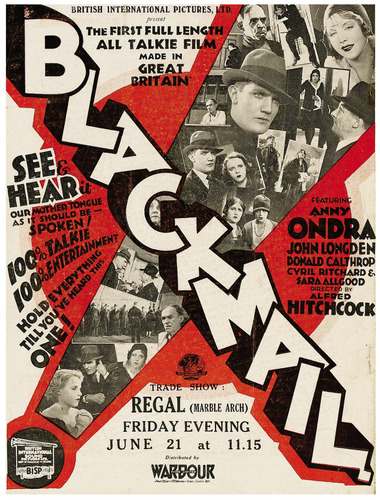
Blackmail (1929)

Standard

Director: Alfred Hitchcock. British International Pictures.

SILENT

 

Producer: John Maxwell. Writer: Alfred Hitchock. Camera: Jack Cox. Sets: W.C. Arnold.

Anny Ondra, John Longden, Donald Calthrop, Sara Allgood, Charles Paton, Cyril Ritchard, Hannah Jones, Sam Livesey.

SYNOPSIS

Young Alice (Ondra), bored with her workaholic Detective boyfriend (Longden), dumps him one night to spend a night on the tiles with an artist (Ritchard) who has taken a shine to her. Invited into his flat, he forces himself on her, forcing her to stab him in self-defence. A creepy man (Calthrop) who earwigged on their earlier conversation attempts to blackmail her.

REVIEW

Rarely seen (and more the pity) as this entirely silent film of Hitchcock’s more famous, semi-talkie version is a stand-alone piece itself, seen to be of better quality.

Blackmail is undoubtedly a visual binge for the eyes, one they will drink in heartily, happily suffering a celluloid hangover. The feats accomplished here are more surprising when one considers that at this time in cinema the silent camera was only just experiencing the dizzying liberation from its usually static confines. Directors such as Hitchcock, Eisenstein and Murnau were now fully confident in utilising all aspects of the art form from acting to camerawork and editing to result in the most thrilling motion pictures.

Here, Hitchcock almost knocks the viewer out with an audacious series of shots and techniques:

His frequent and innovative use of mobile camera as he swings his camera from one character to another, jumps into a ringing phone and also tracks his actors as they walk around the sets.

He performs an immaculately staged craning shot, swiftly following Ondra and Ritchard as they ascend four floors of a Chelsea townhouse with elevator smoothness. Camera wise, Blackmail outclasses most other films of this period, if not all of them.

Hitchcock had already started developing his very own mise en scene in his earlier films’ and would continue to develop this throughout his career, tickling film critics and theorists the world over, as they look ever deeper for psychosexual meanings behind ‘The Master’s’ images.

There are the visual motifs (the outstretched hands of various characters mimics the hand of the murder victim, as if he taunts Ondra from beyond the grave), the car wheels that whirl around, giving chase to not only a criminal at the film’s opening but then Ondra and her complicit lover thereafter.

There are the visual jokes of course. As Ondra walks home from committing her double sins, the sign on a theatre notes the play is a comedy; an advertisement billboard extols the virtues of a gin that is “white as purity”. Hitchcock’s trademark appearance before the camera is as a commuter harassed by a little boy on the underground.

There is also a juicy humour interspersed throughout; when Ondra comes to the police station, ostensibly to ‘fess up, the policeman is incredulous that this could see “women detectives in the yard”, the obvious anachronism not being lost on an appreciative audience.

The technical details of how the sound and silent versions cross-over and how the films came to be made in such a manner could fill a whole other review, but suffice to say contrary to legend, Hitchcock almost certainly planned Blackmail from the outset as finishing at least a part talkie. But the dual production style helped both films contrast and also complement each other in the end.

Ondra, despite her notoriety these days as one of the most unfortunate casualties of the sound transfer (her Polish accent, deemed impenetrable for British audiences, meant she mouthed her lines for the sound version whilst actress Joan Barry spoke hers from nearby on set) turns in a delicate, tortured performance as a flighty girl caught in an escalation of Hitchcockian coincidence. She also displays one the finest pairs of legs in the movies.

Allgood, playing her devoted mother who nags incessantly about doing the cleaning whilst her murderess daughter is being conned in the parlor, would go onto a successful career in Hollywood that ultimately saw her nominated for a Best Supporting Actress Oscar for How Green Was My Valley (1944).


The Five-Year Engagement (2012)

Standard

Director: Nicholas Stoller.

COMEDY


Producers: Judd Apatow, Rodney Rothman, Nicholas Stoller. Writers: Jason Segal, Nicholas Stoller. Camera: Javier Aguirresarobe. Music: Michael Andrews. Sets: Julie Berghoff.

Jason Segal, Emily Blunt, Chris Pratt, Alison Brie, Lauren Weedman, Mimi Kennedy, David Paymer, Jackie Weaver, Jim Piddock, Rhys Ifans, Mindy Kalin, Randall Park, Kevin Hart.

SYNOPSIS

Chef Tom (Segal) pops the question to his sweetheart Violet (Blunt) after they have been going steady for a year and she accepts without question. But, following a series of comic complications, the engagement stretches longer than either anticipated and makes them question how much deep their devotion is.

REVIEW

Perhaps this will be something of a rant review, but I’m allowed one every now and then.

When exactly did cultural prejudice become the norm in Hollywood rom-coms?

Obviously, its been about for sometime in the action genre, never more noticeable than when European accented (mostly British accents from mostly British actors) propounded as the token psychotic baddie in blockbusters, from Alan Rickman in Die Hard to Patrick McGoohan as a flintily megalomaniacal Edward I in Braveheart, this has been discussed by countless other film theorists and commentators.

But on reflection, there has also been a creeping sense of subtle anti-Englishness in the humble romantic comedy from across the pond. You know the type, the genial (or geriatric), bumbling or mumbling, well-spoken, probably-a-cricket-playing-gent. Posh guys in the Princess Diaries movies. Ineffectual and emasculated Ralph Fiennes in Maid in Manhattan. Effortlessly polite and proper Colin Firth in What a Girl Wants. Seemingly imbecilic Hugh Grant in…all of the few things he did stateside.

One-man hilarity juggernaut Apatow (Knocked Up, Superbad et al) doesn’t buck this trend when he steers a chuckle-strewn course to his own full-blown rom com, an admittedly laugh-out loud funny product, starring co-writer Segal.

Blunt is the female Firth then, adding to this catalogue of vaguely offensive xenophobia. The addition of her character to this narrative is slightly clunky.  She has been specifically scripted as English, despite this causing awkward moments when relatives die and the action must therefore shift across the pond in a film that is otherwise entirely American.

The writers’ seem to gleefully show English people as whiny and hysterical (Australian Weaver, doing her best scratchy English voice) or neurotically unbalanced (Brie as Blunt’s very needy sister). All of this is played out in contrast to the relaxed, right-on, crude but level-headed American characters.

Even the Welsh don’t get off  Scot free (though there are no Scottish characters here). Ifans plays a lecherous but cool University  Professor out to nail Blunt, a supercilious and conceited man who gets hung up on Welsh pronunciations.

Now to totally about face with this review. Blunt is great casting in a role that allows her to be considerably funny and quite charming throughout, belying the straight-as-a-rule parts she usually inhabits. Segal is able to probe just that bit deeper to show how depressed a man can get when he sacrifices everything for his spouse’s career.

As you would expect from an Apatow product, the whole film is belt-bustingly amusing, slickly put together and geared wholly toward American viewers. Perhaps for the less cynical English, this will be the perfect romantic and funny movie.


The Queen (2006). Film review of the drama about Queen Elizabeth II, starring Oscar winning Helen Mirren

image film helen mirren the queen
Standard

Film review by Jason Day of The Queen, the drama chronicling Queen Elizabeth II’s (Helen Mirren) days immediately following the death of Princess Diana and the fallout for the British Royal Family.

Drama


Continue reading

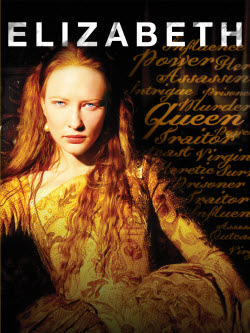
Elizabeth (1998)

Standard

Director: Shekhar Kapoor. Polygram/Working Title/Channel 4 Films

HISTORICAL/PERIOD/EPIC

Producer: Tim Bevan, Eric Fellner, Alison Owen. Writer: Michael Hirst. Camera: Remi Adefarasin. Music: David Hirschfelder. Sets: John Myhre.

Cate Blanchett, Geoffrey Rush, Christopher Eccleston, Joseph Fiennes, Richard Attenborough, Fanny Ardant, Eric Cantona, Vincent Cassel, Kathy Burke, Edward Hardwicke, Emily Mortimer, John Gielgud, James Frain, Jamie Foreman, Kelly Macdonald, Daniel Craig, Lily Allen.

SYNOPSIS

A period drama that tells the story of the early years of Elizabeth I’s (Blanchett) reign, from her days as a Protestant teenager under house arrest by her unbalanced half-sister Queen Mary (Burke) to uneasily taking the throne, surviving numerous assasination attempts and negotiating the tricky matter of marriage.

REVIEW

Bandit Queen director Kapoor being chosen  as the director of this Elizabeth I biopic that giddily subverts (and even inverts) the woman and the times she lived in, probably raised as many historian’s eyebrows as did writer Hirst’s unique, fact-eschewing take on one of Britain’s most famous Queens.

Casting Blanchett who, at this time, was not a major international movie star (though this would help change that) was the first stroke of genius in a film littered with some rather odd-ball casting choices. As many of us will know, Elizabeth Tudor was a complex, contradictory woman. Intelligent, but prone to great misjudgements. A virgin, yet outrageously flirtatious (and then some in this controversially gamey characterisation). Deep and intellectual yet also superficial. Capricious and swift, yet she would also prevaricate and dither. Blanchett, despite not being properly tried out in motion pictures, is able to capture all of this but never once makes Elizabeth seem like a text book perfect, clipped accent Glenda Jackson going for a BAFTA turn; Elizabeth is a fallible human, she is funny and has just that right amount of royal pizzazz. Elizabeth is a girl you might actually want to have a drink with.

She heads up a cast list that includes footballer Cantona as a French Ambassador, Burke as mad, Bloody (Queen) Mary, Cassel as the cross-dressing, bisexual Duke d’Anjou and, right down the cast list, singer Allen as a young Lady-in-Waiting (her mother was the clever casting director).

Attenborough has a cuddly charm as Elizabeth’s most trusted adviser Lord Burleigh. Fiennes makes a handsome Lord Dudley for Elizabeth to tinker with in scenes that show her status as a national Virgin should have been checked out under the medieval Trade Descriptions Act.

The period production of course looks fantastic but Kapoor is careful not to let it swamp her visual style too much. In a precursor to TV’s The Tudors (incidentally, also written by Hirst), she keeps the action and her actors moving, shedding the usual period drama format of static actors frozen to the spot orating and pontificating for effect. This brisk approach adds to the freshness of the drama.

The 39 Steps (1935)

Standard

Film review of the classic 1930’s thriller by Alfred Hitchcock starring Robert Donat as a man on the run from a false charge of murder and Madeleine Carroll as the women who might help him.

Director: Alfred Hitchcock. 86 mins. Gaumont. (U).

Thriller/Suspense/Film Noir


Continue reading