Read all about it…movies in the news (8 Oct 2012)

Standard

Loving The New Yorker‘s work recently, they keep churning out eye-catching film articles. This piece, by ‘Cinerama’ guru Dave Kehr, looks at the Museum of Modern Art’s ‘To Save and Protect’ project, restoring, preserving and screening old and rare film, several of which are being shown at the New York Film Festival. They include an early sound film starring silent movie goddess Clara Bow, the racily titled Call Her Savage (1932).

Ahead of the release of several already acclaimed gay movies, The Guardian looks at how a ‘New Wave Queer Cinema’ is developing, grounded in ‘real’ storylines with well rounded characters, rather than being based on ‘issues’ or superficial, rom-com style films. The article, correspondingly, is in-depth and serious, but still fascinating as gay film-makers talk about how they are working toward depicting being gay in a manner where it is part of the normal fabric of the film.

Looper (2012)

Standard

Film review by Jason Day of the science fiction film Looper starring Joseph Gordon Levitt and Bruce Willis. 

Science Fiction

Continue reading

Read all about it…movies in the news (4 Oct 2012)

Standard

It’s autumn, so that means the film festival season kicks off. E. Nina Rothe writes about her appreciation of the Saudi film festivals that have just started with the Abu Dhabi Film Festival. Amongst the films on show are new works by Robert Redford and Sally Potter. Italian screen legend Claudia Cardinale will receive a lifetime achievement award. Read more here.

Associated Press snag an interview with Barbara Broccoli as the Bond publicity juggernaut rears it’s unstoppable head again in the run up to the release of Skyfall on 23 October. The article includes some interesting, behind-the-scenes tittle tattle that also features in the Bond documentary released this weekend, Everything or Nothing.

Solid, well-written New Yorker piece from critic David Denby who opines the loss of grown-up movies and fears for the future of cinema itself. Whilst he praises some genre films and the animated output of companies such as Pixar, is the cinema degrading itself in a general sense? Denby is a man who adores cinema; well worth a read.

Future movie releases…w/e 5 October 2012

Standard

English Vinglish – drama in the Shirley Valentine vein as a belittled Indian housewife seeks emancipation when she enrols on an English course. View the trailer here. Showing at key cities only.

Everything or Nothing : The Untold Story of 007 – documentary, smartly being released just ahead of the new Bond Skyfall. Again, key cities only.

The Knot – billed as the British Bridesmaids meets The Hangover...so you know just what to expect from this comedy! Official Facebook page is here. Key cities only.

Liberal Arts – Josh Radnor is the writer/director/lead actor in this campus romance, as a man down on his job who is given the opportunity to relive his College days. He meets the beautiful sophomore Elizabeth Olsen and finds direction once again. Official IFC website is here. Key cities only.

Sinister – Ethan Hawke is the true crime novelist who comes across a box of sinister home movies. From the makers of Paranormal Activity. Official site is here. Showing all over the UK.

Some Guy Who Kills People – the title more or less sums this up; a newly released mental hospital patient (Kevin Corrigan) sets about killing the people he deems are responsible for his miserable life. The official site is here. Key cities only.

Sparkle – Mowtown era musical starring Jordin Sparks as the musical prodigy struggling to set up a girl group with her sisters. The ghoulish amongst you may want to take note; this is the last film Whitney Houston (starring as Sparks’ mum) made before her death. Official site is here. Key cities.

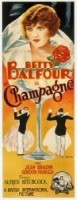
Champagne (1928)

Standard

Director: Alfred Hitchcock. British International Pictures (BIP)

COMEDY


Producer: John Maxwell. Writers: Alfred Hitchcock, Eliot Stannard. Camera: John J. Cox. Music: Mira Calix (2012 reissue). Sets: Wilf Arnold.

Betty Balfour, Jean Bradin, Ferdinand van Alten, Gordon Harker.

SYNOPSIS

Spoiled heiress Balfour defies her father by running off to marry her handsome but poor lover (Bradin). But Daddy (Harker) has a few tricks up his sleeve to show his daughter who is in control.

REVIEW

Hitch’s effervescent silent comedy stars the irrepressible and mostly adorable Balfour (so called the British Mary Pickford, though here she’s far gamier and raucous than eternal child of the screen Pickford ever was) and is as delightful as the bubbles up your nose that champagne itself can bring.

Hitch was never the master of comedy, but when he attempted one they were clever and efficiently produced. Champagne is an of-it’s-time frothy confection on the surface, but underneath runs a vein of cutting social observation. Hitch’s sly swipes at the frivolously hedonistic ‘It’ girls of the day have more than just a whiff of mendacious commentary. Perhaps this explains the ‘fun’ that comes from the storyline as Balfour is hoodwinked by all around her, veritable torture for such a flibbertigibbet.

His attention would always be on the visuals and there is an awesome opening shot, as a champagne bottle’s cork and contents explode over the camera, cutting directly to the point of view of a club reveller downing a glass of bubbly, the dancers in front of him magnified through the side of the glass. There is an ingenious trick shot later, aboard a rocking ocean liner, the crew lurching to and fro in perfect unison. Later, Balfour appears to whizz in and out of Bradin’s view as he succumbs to sea sickness.

Balfour has buckets of charm as the original 24 hour party girl. Bradin is good looking but otherwise vacuous as the socialist minded boyfriend whom she adores.

This reissue, from the British Film Institute, features an intriguing, other-worldly score from Calix, who herself described her music as “psychedelic”. Audiences will certainly agree; it may take a little getting used to. It’s interesting to note how a different score can totally change the meaning and appreciation of a silent film. Calix makes eerie use of violins during the opening, as shrill and nerve jolting as those Bernard Hermann would utilise in Hitch’s Psycho (1960). It is a slightly epileptic modern jazz, almost discordant but never displeasing, like a pleasant hangover. The original vocals, by the Juice vocal ensemble, are almost a sibilant wail and veer from Madonna’s ‘Papa Don’t Preach’ to Pink’s ‘Get the Party Started’, suitably complementing the kooky acoustics.

A tasty and satisfying vintage that has been made glorious for modern eyes and ears.


Judith of Bethulia (1914). Film review of the mini-epic from D.W. Griffith.

image still silent film judith bethulia 1914
Standard

Film review, by Jason Day, of D.W. Griffith’s early silent movie epic Judith of Bethulia, starring Blanche Sweet in the title role.

Silent

Continue reading

Future movie releases…w/e 28 September 2012

Standard

Babymakers – oh Lord, this sounds wrong on all levels. Jay Chandrasekhar’s comedy about a bank heist. Except it’s a sperm bank, as Paul Schneider realises he can’t get his wife pregnant and needs to nab the deposit he gave years before. Can cinema get lower than such concepts? Funniest thing about it seems to be the name of one of the writers: Gerry Swallows. Official site is here. Thankfully, listed as ‘London screenings only’ – is our capital not worth more?!

Barbara – Nina Hoss plays a doctor in 1980’s East Germany, suddenly relocated to a rural hospital. Official site (for those who understand German) is here. If you don’t, you’re stuck with IMDb. Key cities.

The Campaign – Jay Roach, who gave us some of the Austin Powers movies, gives us a timely, comical insight into American politics. Trailer looks funny; let’s hope not all of the best gags have been used to make it. Starring Will Ferrel. Official (US) site is here. Will be playing nationwide.

Cross of Honour – WW2 drama as English and German bomber pilots find themselves holed up in a mountain top cabin and having to work together in order to survive. Rupert Grint is one of the English guys. IMDb site has some more details, listing the film as Into the White, here.

Holy Motors – French film-makers can certainly throw out some original films. Leos Carax directs Denis Lavant as a man who takes on many different guises during one day, in a story generated by the director’s own interest in the after hours life of stretch limos. Kylie Minogue and Eva Mendes are among those making cameos. Official site: click here. Key cities only.

Husbands – John Cassavetes 1970 drama follows three friends embarking on a nihilistic journey after the sudden death of an old friend. Showing at key cities. The film is being re-released by the company Park Circus; you can read more about their work here.

Looper – Rian Johnson’s complicated Inception style thriller, with Bruce Willis is a mob enforcer sent back from the future to kill his younger self (Joseph Gordon-Levitt). Emily Blunt co-stars. Official Sony Pictures site is here. Showing all over.

Resident Evil: Retribution 3D – enough already! Haven’t the RE zombies finished us all of yet? Come on guys, team-work! It’s only Milla Jovovich! Official nonsense (and crazily presented nonsense too) is here.

On Wednesday…

The Perks of Being a Wallflower – teen romance, based on Stephen Chbosky’s book. Co-starring Harry Potter‘s Emma Watson. Showing nationwide. Official site is here (love the OTT CV’s of the actors).

On Thursday…

Taken 2 – Liam Neeson signs on for a sequel to his 2008 mega-hit. This time around, he just gets to warn his daughter she is about the kidnapped. Official site is here.


Read all about it…movies in the news (25 Sep)

Standard

It’s Hitchcock, Hitchcock, Hitchcock – the director’s silent comedy Champagne, restored by the BFI is to be streamed live this Thursday at 7:30. You can watch it here.

Savages (2012)

Standard

Director: Oliver Stone.

ACTION/ADVENTURE/FANTASY


Producers: Moritz Borman, Eric Kopelof. Writers: Shane Solerno, Oliver Stone, Don Winslow. Camera: Dan Mindel. Music: Adam Peters. Sets: Tomas Voth.

Aaron Taylor-Johnson, Taylor Kitsch, Blake Lively, Benicio Del Toro, Salma Hayek, John Travolta, Emile Hirsch, Mia Maestro, Demian Bechir.

SYNOPSIS

Ben (Taylor-Johnson) and Cho (Kitsch) grow the finest marijuana in the whole of America, if not the world. They’ve become very successful at developing, cultivating, and distributing this precious weed and live an idyllic life by the beach with the beautiful Ophelia (Lively), who is lover to them both. But their tranquility is threatened when the leader of a brutal Mexican drug cartel (Hayek) wishes to take over their enterprise. She has ‘O’ kidnapped, setting in train a series of events as Ben and Cho try to rescue her. It all ends very badly.

REVIEW

In a visceral (if not exactly lyrical) return to form for Stone (Wall Street 2, anybody? I thought not), the old goat of politco-cinema returns and harks back to the controversial, hysterical cartoon violence of Natural Born Killers mixed with a fairly obvious ‘drugs is bad kids’ message.

The story bears some familiar calling cards of that film but, in what could be a sign of the times since that film’s release (1994) this essay in ultra violence and bloodshed seems to have passed under the twitchy censor’s notice as a notorious, publicity seeking piece. Savages is a slightly aggravating, cinematic teenage younger brother trying to pull the rug from under his far more naughty, illustrious superior.

But even a slightly weaker Stone film is better than any other director’s attempt to assault the sensibilities.

From the opening, a typical Stoneian jolt to the system as grainy mobile phone footage shows a group of kidnapped men and then strikingly cutting away to an idyllic ocean surf image washes over you as a chainsaw is heard revving in the background, the Stoner (excuse the pun) still has an admirable grip on his audience.

It’s that all too recognisable, jaunty, fist in the face, beyond-mere-montage editing look that makes this so obviously Stone’s work. Only a director like this can get away with such visually verbose, poetic expressions of extreme violence and torture juxtaposed with the opening petals of lotus flowers, a paradise beach front setting, loved up troilism and questionably sweet ethical stances as Taylor-Johnson seems to plow his ill-gotten loot into funding schools and sanitation projects in the third world. (Are drug dealers, even those who fervently follow Buddha, this altruistic)?

One thing that does count against him, and perhaps it can be ascribed to the self-indulgence of a famous film-maker, is the alternative ending, which to this reviewer seemed a stylistic flourish too far and added extra time to an already fairly long heist movie.

Another detraction is sometimes half-arsed, unintentionally funny dialogue. When Ophelia tells us “Just because I’m telling you this story, doesn’t mean I’m alive by the end of it”, you know that beach bum drop-out naval gazing will be the order of the day throughout. Later, on her sex life with strapping war veteran Cho: “I had organs…he had wargasms”, blah blah, you get the picture.

Stone and his team have assembled a dream cast though who play it (apart from the three young leads) as if they were headlining a coke-fuelled panto.

The extraordinary Hayek enjoys herself as a drug ‘el-matriarchi’, dead-eyed and buxom, wearing a tarantula-black wig as she calmly orders a raft of executions.

Travolta, as a chilled out FBI Agent who is also in the pocket of the cartels, seems to have wandered in bleary eyed from the set of another film, possibly an as yet un-named Tarantino comeback flick that has presently hit the financial buffers.

Del Toro has the better part as the wily, flinty eyed enforcer who seems to be double and triple-crossing all of other the characters in the film, coldly dispatching those in his way with awesome neatness. His modulated voice and almost serene exterior make his actions seem even more heinous.

Taylor-Johnson, Kitsch and Lively (who narrates in a pop style) look lively in the leads and hold their own to some degree, but this is an older person’s film and all the better for it.


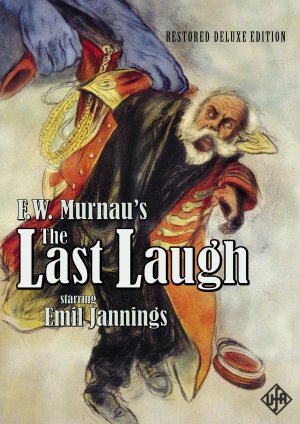
The Last Laugh/Der Letzte Mann (1924)

Standard

Director: F.W. Murnau. UFA.

SILENT


Producer: Erich Pommer. Writer: Carl Meyer. Camera: Karl Freund. Music: Werner Schmidt-Boelcke, Giuseppe Becce, Karl Ernst Sasse. Florian C. Reithner (1996 reissue). Sets: Edgar G. Ulmer.

Emil Jannings, Maly Delschaft, Max Hiller, Emilie Kurz, Hans Unterkircher, Olaf Storm, Hermann Valentin, Georg John, Emmy Wyda.

SYNOPSIS

Physically unable to carry the burden of his duties any longer, a hotel doorman (Jannings) is given a less taxing but more menial position as a bathroom attendant. Embarrassed and humiliated that his neighbours will no longer see him for the preening peacock that he is, he steals the coat of his uniform in a bid to pull the wool over their eyes. But his peeping in-law Kurz spots the new man on the job and tells his neighbours.

REVIEW

One of the crowning glories of the golden age of expressionistic film-making in post World War I Germany (expressionism being an artistic movement where, to put it simply, the artistic product is exaggerated wildly for emotional effect, to evoke moods or ideas), this is a simple story about human pride and human failings that is, correspondingly. distorted onto a lavish, multi-million DeutschMark canvas.

Based on Nikolai Gogol’s anti-militaristic novel The Coat, it is turned by expressionist supremo Murnau into a visually stunning, gripping tale that hits its mark despite, or perhaps because of, Murnau’s decision to not use a single title card to explain the action. Silent movies had progressed to such a level of stylistic sophistication that written descriptions were no longer necessary. This addition (or subtraction) was not repeated in other films of the period though.

Among the most notable features here is the admirable use of mobile camera work that really liberates the action; the moment where the porter imagines the Atlantic Hotel is going to topple down on him and the night watchman’s torch that seems to focus Jannings’ desperation.

All in all, Murnau created perhaps the most modern and accomplished of silent films up to this point.

Narrative wise, the story is strong when it comes to exploring themes of how the importance placed on uniforms can envelop people and leave them to assuming a role dictated by position and it is interesting to see how Murnau positions other people in relation to the obsession Jannings has with his coat – his neighbours protect it from the dust they beat out of their carpets. It doesn’t require a huge leap of faith to link this theme to the still very recent memories of WW1 and it is prescient in terms of what would happen only a decade later in Germany under Nazi rule.

Interesting to note that the porter/janitor character is unnamed throughout. In fact, every character is defined by their function or relationship to him. This impersonality is a little unsettling, as if Murnau is refusing us identify with his characters on a personal level, but it concentrates the mind a little more on what people are doing rather than who is doing it.

There was no other face of the silent era that was better constructed to convey angst, desperation and dismay at the vicissitudes that life can throw at us that Jannings. He always excelled in roles that required him to suffer nobly as opprobrium is heaped upon him and, here, his terrified, kitten-like eyes are almost painful to watch. It is a performance of commendable physicality – bolt upright and proud when we first see him, saluting his neighbours and fastidiously attending to his appearance and then crook-backed and shifty as the film finishes.

Quite why Murnau then had to ruin all of his good work with a completely disposable epilogue is another matter, but The Last Laugh is still a grand piece.