Savages (2012)

Standard

Director: Oliver Stone.

ACTION/ADVENTURE/FANTASY


Producers: Moritz Borman, Eric Kopelof. Writers: Shane Solerno, Oliver Stone, Don Winslow. Camera: Dan Mindel. Music: Adam Peters. Sets: Tomas Voth.

Aaron Taylor-Johnson, Taylor Kitsch, Blake Lively, Benicio Del Toro, Salma Hayek, John Travolta, Emile Hirsch, Mia Maestro, Demian Bechir.

SYNOPSIS

Ben (Taylor-Johnson) and Cho (Kitsch) grow the finest marijuana in the whole of America, if not the world. They’ve become very successful at developing, cultivating, and distributing this precious weed and live an idyllic life by the beach with the beautiful Ophelia (Lively), who is lover to them both. But their tranquility is threatened when the leader of a brutal Mexican drug cartel (Hayek) wishes to take over their enterprise. She has ‘O’ kidnapped, setting in train a series of events as Ben and Cho try to rescue her. It all ends very badly.

REVIEW

In a visceral (if not exactly lyrical) return to form for Stone (Wall Street 2, anybody? I thought not), the old goat of politco-cinema returns and harks back to the controversial, hysterical cartoon violence of Natural Born Killers mixed with a fairly obvious ‘drugs is bad kids’ message.

The story bears some familiar calling cards of that film but, in what could be a sign of the times since that film’s release (1994) this essay in ultra violence and bloodshed seems to have passed under the twitchy censor’s notice as a notorious, publicity seeking piece. Savages is a slightly aggravating, cinematic teenage younger brother trying to pull the rug from under his far more naughty, illustrious superior.

But even a slightly weaker Stone film is better than any other director’s attempt to assault the sensibilities.

From the opening, a typical Stoneian jolt to the system as grainy mobile phone footage shows a group of kidnapped men and then strikingly cutting away to an idyllic ocean surf image washes over you as a chainsaw is heard revving in the background, the Stoner (excuse the pun) still has an admirable grip on his audience.

It’s that all too recognisable, jaunty, fist in the face, beyond-mere-montage editing look that makes this so obviously Stone’s work. Only a director like this can get away with such visually verbose, poetic expressions of extreme violence and torture juxtaposed with the opening petals of lotus flowers, a paradise beach front setting, loved up troilism and questionably sweet ethical stances as Taylor-Johnson seems to plow his ill-gotten loot into funding schools and sanitation projects in the third world. (Are drug dealers, even those who fervently follow Buddha, this altruistic)?

One thing that does count against him, and perhaps it can be ascribed to the self-indulgence of a famous film-maker, is the alternative ending, which to this reviewer seemed a stylistic flourish too far and added extra time to an already fairly long heist movie.

Another detraction is sometimes half-arsed, unintentionally funny dialogue. When Ophelia tells us “Just because I’m telling you this story, doesn’t mean I’m alive by the end of it”, you know that beach bum drop-out naval gazing will be the order of the day throughout. Later, on her sex life with strapping war veteran Cho: “I had organs…he had wargasms”, blah blah, you get the picture.

Stone and his team have assembled a dream cast though who play it (apart from the three young leads) as if they were headlining a coke-fuelled panto.

The extraordinary Hayek enjoys herself as a drug ‘el-matriarchi’, dead-eyed and buxom, wearing a tarantula-black wig as she calmly orders a raft of executions.

Travolta, as a chilled out FBI Agent who is also in the pocket of the cartels, seems to have wandered in bleary eyed from the set of another film, possibly an as yet un-named Tarantino comeback flick that has presently hit the financial buffers.

Del Toro has the better part as the wily, flinty eyed enforcer who seems to be double and triple-crossing all of other the characters in the film, coldly dispatching those in his way with awesome neatness. His modulated voice and almost serene exterior make his actions seem even more heinous.

Taylor-Johnson, Kitsch and Lively (who narrates in a pop style) look lively in the leads and hold their own to some degree, but this is an older person’s film and all the better for it.

The Last Laugh/Der Letzte Mann (1924)

Standard

Director: F.W. Murnau. UFA.

SILENT


Producer: Erich Pommer. Writer: Carl Meyer. Camera: Karl Freund. Music: Werner Schmidt-Boelcke, Giuseppe Becce, Karl Ernst Sasse. Florian C. Reithner (1996 reissue). Sets: Edgar G. Ulmer.

Emil Jannings, Maly Delschaft, Max Hiller, Emilie Kurz, Hans Unterkircher, Olaf Storm, Hermann Valentin, Georg John, Emmy Wyda.

SYNOPSIS

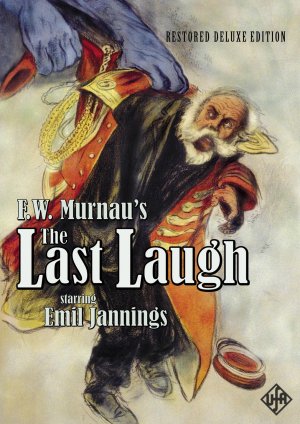
Physically unable to carry the burden of his duties any longer, a hotel doorman (Jannings) is given a less taxing but more menial position as a bathroom attendant. Embarrassed and humiliated that his neighbours will no longer see him for the preening peacock that he is, he steals the coat of his uniform in a bid to pull the wool over their eyes. But his peeping in-law Kurz spots the new man on the job and tells his neighbours.

REVIEW

One of the crowning glories of the golden age of expressionistic film-making in post World War I Germany (expressionism being an artistic movement where, to put it simply, the artistic product is exaggerated wildly for emotional effect, to evoke moods or ideas), this is a simple story about human pride and human failings that is, correspondingly. distorted onto a lavish, multi-million DeutschMark canvas.

Based on Nikolai Gogol’s anti-militaristic novel The Coat, it is turned by expressionist supremo Murnau into a visually stunning, gripping tale that hits its mark despite, or perhaps because of, Murnau’s decision to not use a single title card to explain the action. Silent movies had progressed to such a level of stylistic sophistication that written descriptions were no longer necessary. This addition (or subtraction) was not repeated in other films of the period though.

Among the most notable features here is the admirable use of mobile camera work that really liberates the action; the moment where the porter imagines the Atlantic Hotel is going to topple down on him and the night watchman’s torch that seems to focus Jannings’ desperation.

All in all, Murnau created perhaps the most modern and accomplished of silent films up to this point.

Narrative wise, the story is strong when it comes to exploring themes of how the importance placed on uniforms can envelop people and leave them to assuming a role dictated by position and it is interesting to see how Murnau positions other people in relation to the obsession Jannings has with his coat – his neighbours protect it from the dust they beat out of their carpets. It doesn’t require a huge leap of faith to link this theme to the still very recent memories of WW1 and it is prescient in terms of what would happen only a decade later in Germany under Nazi rule.

Interesting to note that the porter/janitor character is unnamed throughout. In fact, every character is defined by their function or relationship to him. This impersonality is a little unsettling, as if Murnau is refusing us identify with his characters on a personal level, but it concentrates the mind a little more on what people are doing rather than who is doing it.

There was no other face of the silent era that was better constructed to convey angst, desperation and dismay at the vicissitudes that life can throw at us that Jannings. He always excelled in roles that required him to suffer nobly as opprobrium is heaped upon him and, here, his terrified, kitten-like eyes are almost painful to watch. It is a performance of commendable physicality – bolt upright and proud when we first see him, saluting his neighbours and fastidiously attending to his appearance and then crook-backed and shifty as the film finishes.

Quite why Murnau then had to ruin all of his good work with a completely disposable epilogue is another matter, but The Last Laugh is still a grand piece.

Future movie releases…w/e 21 September 2012

Standard

Released, as of this Friday…

Big Boys Gone Bananas – Swedish film-maker Fredrik Gerttens looks at how his original documentary Bananas, examining claims from Dole food staff that working conditions left them infertile, was negatively affected by the company he was exposing. Showing at key cities only. Official site is here.

Diana Vreeland: The Eye Has to Travel – Vreeland’s granddaughter-in-law directs this docu about the noted fashion editor. Showing at key cities only. Official site is here.

Heroine – Kareena Kapoor stars in this Bollywood drama about the life of a once successful film star. Key cities. Wikipedia has some details here.

House at the End of the Street – Jennifer Lawrence and her mum move into a house where the previous occupant killed her parents. As you would expect, the story is far from finished. Official Facebook page is here with cinema listings for the UK, photos and trailers. Showing all over, you lucky sorts!

Hysteria – saucy sounding comedy with Hugh Dancy as an idealistic young doctor working with Rupert Everett on a series of sexual therapies to help loosen up the hysterical women of London, among them Maggie Gyllenhaal, Sheridan Smith and Felicity Jones. Key cities only. Official Sony site is here.

Inbred – British Texas Chainsaw Massacre/Wrong Turn horror in which a group of young offenders and their care workers are menaced in a remote Yorkshire village by the inbred locals. Well, that’s fun in Northernshire for you! Key cities only. Official site is here.

Indiana Jones: Raiders of the Lost Ark – showing at Imax cinemas only so a big, big dusting off for the first in the Spielberg/Ford quadrilogy about the intrepid archaeologist.

Killing them Softly – A strong male cast, led by a seemingly impressive Brad Pitt, head up this crime thriller. Pitt is the enforcer investigating a robbery at a high stakes mob poker game. Could this be the film that nabs him an Oscar? Official site lends a few hints here. Showing all over the UK.

The Prophet – director and composer Gary Tarn’s film, if you can call it that, of Kahlil Gibran’s novel. Leaving the meaning of the film very much up to the viewer, Tarn mixes the nararative of the book with his own travels through the Lebanon, Serbia, New York, Milan and London. At key cities only. Thandie Newton narrates and the official site is here.

Santa Sangre – gruesome sounding horror from 1989 about a man who embarks on a campaign of revenge with his armless mother. Thankfully, showing at key cities only! IMDb has details here.

Savages – Salma Hayek dons a tarantula black wig as the head of a Mexican drug cartel who wants to get into bed with Aaron Johnson and Taylor Kitsch – professionally of course, as they happen to grow the finest marijuana in North America. When they refuse, she kidnaps the girl whom they are in a three-way with (Blake Lively) leading to an extraordinary capture and revenge caper that ropes in dodgy FBI agent John Travolta, Uma Thurman and Emile Hirsch. Olvier Stone directs and with this cast, it should be available all of the UK. Official site is here.

Tower Block – Sheridan Smith again (the girl must be worn out this year, after Mrs Biggs on TV and, now Hedda Gabler at The Old Vic). A British thriller that centres on the residents of an inner city tower block being picked off by a sniper, a year after witnessing a murder. Key cities only. IMDb has a few more details.

Untouchable – actor Omar Sy has taken a few international awards for his performance here, as a young man from the inner city in France who is hired to help an aristocrat when he is paralysed after an accident. The trailers look good and so do the reviews. Unaccountably, it looks like the release will be in London only for this week. IMDb lowdown is here.

On Monday next week…

Saints and Soldiers 2: Airborne Creed – WWII drama about a group of soldiers rescuing partisans whilst on their way to support allied troops marching toward Berlin. Official site is here.


Hope Springs (2012)

Standard

Director: David Frankel. Escape/Management 360/Mandate/MGM

DRAMA

Producer: Todd Black, Guymon Casady. Writer: Vanessa Taylor. Camera: Florian Ballhaus. Music: Theodore Shapiro. Sets: Stuart Wurtzel.

Meryl Streep, Tommy Lee Jones, Steve Carel, Jean Smart, Ben Rappaport, Marin Ireland, Patch Darragh, Brett Rice, Elisabeth Shue, Mimi Rogers.

SYNOPSIS

Kay (Streep) and Arnold (Jones) are a middle-aged couple having serious marital problems. They sleep in separate rooms and hardly speak, let alone touch or make love. At the end of her tether, Kay blows her savings on a week-long trip to a relationship counsellor (Carel) in Maine. Reluctantly, Arnold follows and the therapist delves deep into the most private and intimate details of their lives in a bid to help them.

REVIEW 

Given the bright and breezy poster and how this has been promoted, one could be forgiven for leaving the cinema feeling slightly short-changed by Hope Springs.

Not that it isn’t a good film (it is), but when you are lead to expect a comedy drama, you kind of expect a few laughs. Director Frankel is the man behind many episodes of Sex and the City so you would expect a film that doesn’t take itself too seriously. Hope Springs, however, is a very sober examination of when the rot seeps in to an otherwise loving and devoted couple.

Side-stepping the lack of hilarity matter, on this level Hope Springs works extremely well as there is a trio of exceptional, quietly impressive performances.

Leading the way and almost waltzing away with the whole film is Streep. One expects excellence from this most actorly of actors and she delivers the goods with customary versatility as a mousy, passive aggressive type of middle-class wife who rediscovers her sexy self. She speaks in a calm voice, just above a whisper, the sort of woman who unconsciously fastens the buttons on her cardigan when the word sex is mentioned. This is a delicately detailed and precisely observed turn.

Jones, whose craggy, lived-in features are perfectly suited to play the boorish male menopausal, is up there with her. Like Streep, this is a performance of layers – the man at the end of the film is not the man we are initially presented with and his fears and phobias are given a generous airing thanks to his skilful underplaying.

Carel completes the superlative acting hat-trick as a trendy, right-on, talk it out therapist who needles the pair and gets under their skin with professional thoroughness.

Back to the laughs – well, hope springs indeed if you want any chuckles. The script definitely needed to be a bit gamier here. The players (especially Carel) are certainly capable of making you smile; indeed, when the writing gives them the opportunity, they jump at it and show how much further they could have pressed. But Frankel and writer Taylor stubbornly decide to play it straight and make this an “issues” movie only. No major calamities therefore, just something of a missed opportunity.

Greed (1924)

Standard

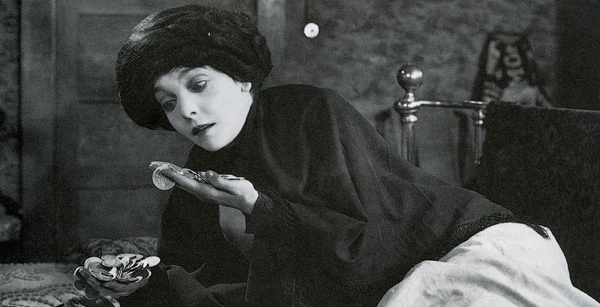
Film review of the silent movie epic directed by Erich von Stroheim starring Zasu Pitts as a woman who wins a small fortune on a lottery and whose life with her simple minded dentist husband McTeague (Gibson Gowland) and former beau Marcus (Jean Hersholt) descends into miserly obsession, madness and murder as she tries to retain every single cent of her winnings.

To like this review, comment on it or to follow this blog, please scroll to the bottom of the page.

Director: Erich von Stroheim. MGM, 239 minutes. (PG)

Silent

Continue reading

The Lodger: A Story of the London Fog (1926)

Standard

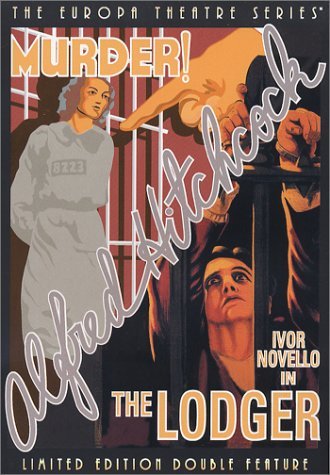
Film review of the silent Alfred Hitchcock film starring Ivor Novello.

Director: Alfred Hitchcock. Gainsborough/Carlyle Blackwell.

SILENT


Cast & credits

Producers: Michael Balcon, Carlyle Blackwell.
Writers: Alfred Hitchcock, Eliot Stannard.
Camera: Gaetano di di Ventimiglia, Hal Young.
Music: Ashley Irwin (1999 reissue).
Sets:
C. Wilfred Arnold, C. Bertram Evans.

Ivor Novello, June, Marie Ault, Arthur Chesney, Malcolm Keen.

SYNOPSIS

There has been a series of brutal murders, in which the victims are all blonde women. Young Daisy’s (June) parent’s take in a mysterious and creepy, but handsome, young lodger (Novello). He has a habit of being absent from the house during the time that each new victim is slain. But pretty, golden haired Daisy is drawn to him and spends more time in his rooms, even as her mother (Ault) and her ex-boyfriend, a policeman (Keen) start to gather circumstantial evidence against him.

REVIEW

Jack the Ripper has long held a grip on British criminology and the public fascination with crime ever since he committed his atrocities against women in the 1890’s.

Within less than a year, this still unknown assailant had killed five prostitutes in the east end of London. Despite a committed police effort and local uprising at their perceived inefficiencies, he was never caught. To this day, he hasn’t been conclusively identified, so his presence looms over us still somewhat.

In this film, based very loosely on the case, a young director who would cast his own, rather portly, shadow across international cinema, lets us see the flip side of the coin in the Ripper saga.

Known to most audiences by the first part of it’s title (for a ‘story of the London fog’, there is precious little of that in any part of the film), this early offering from Hitchcock offers an intriguing taster of what he would deliver to film audiences over the next half century.

On reflection, and seen as a whole piece, The Lodger is not as arresting as Hitch’s other silent films (Blackmail being an obvious example). This film can perhaps be seen as Hitchcock groping his way toward the full narrative and stylistic mise en scene that would later be so easily recognisable as ‘Hitchcockian’.

This furtive fumbling in the cinematic darkness might explain The Lodger‘s plodding pace that is a major detraction. For less than an hour and a half, the time seems to drag. The relative lack of the key ingredients that make Hitch’s films uniquely his compounds this feeling further.

Never the less, there are some intimate, sexually charged shots as Hitch and his cameraman catch Novello and June in glistening soft-focus close-ups as they kiss for the first time. His taste for expressionistic visual flourishes abounds (Daisy’s mother in her starkly designed room; the silhouette of the window frames that projects a cross on Novello’s face when he first moves in).

Daisy’s nosey and perceptive mother (Ault), who cottons on to Novello’s weirdness before the coppers, elaborates on Hitch’s obvious mistrust of the police and capture, that would be most noticeable in later products, such as The Wrong Man and North by Northwest.

Novello may have been the darling of London stage and society at this time but his histrionic, fey turn is as suspect as his character (for a man attempting to go undercover, he blows his cover with creepy Nosferatu body language stares before he’s even stepped foot inside the front door).

Future movie releases…w/e 14 September 2012

Standard

About Elly – Iranian drama about a young woman who, whilst trying to match-make on a trip with friends, innocently sets about a series of events with a shocking conclusion. The Axiom Films website has more here. Showing in key UK cities.

Anton Corbijn: Inside Out – Dutch language docu that follows the titular artist as he travels the world. There is an official site here for those who read Dutch but IMDb might be most people’s safer bet for more details. Showing at the Curzon London only though.

Barfi! – Indian ‘cheeky chappie’ comedy. The official UTV site is here, IMDb is here.

Hope Springs – if they mean in terms of making a hit film, then having Meryl Streep in the lead role makes that almost certain. Well cast comedy about a middle-aged couple (Streep and Tommy Lee Jones) approaching a crisis point in their marriage. Steve Carell is the guidance counsellor whose help they seek. Nice looking Columbia/Magnate website but, if you’re going to have a whole photos section, put a few more pics in it.

Keyhole – odd sounding Guy Maddin thriller, in which gangster Jason Patric returns home after a long absence with the body of a dead girl in tow, his gang inside his house and estranged wife Isabelle Rossellini in their bedroom. Good reviews from the likes of Roger Ebert, but definitely strange. Official site is here.

Paranorman 3D – fun looking Laika (Coraline) animation, showing in 2 and 3D about a young boy who talks to the dead called upon to save his town from Zombies and other ghouls. Official site is here.

Premium Rush – Joseph Gordon-Levitt, whom people of a certain age might remember as the constantly confused teenage alien in Third Rock From the Sun is becoming a mainstream movie man of the moment, after so many indie flicks, following his appearance in The Dark Knight Rises with this action thriller about a bike courier who picks up the wrong message. Sony Columbia’s official site has a trailer…and that’s it (making this look like The Fast and the Furious on two wheels). IMDb is here.

The Snows of Kilimanjaro – No, not the US 50’s drama with Gregory Peck atop aforementioned mountain, recounting the three women in his life but a French drama played out against the backdrop of trade union activity in a local community. Official Cinefile website has the full plot here.

To Rome With Love – typically star-studded Woody Allen offering, this time a romantic ode to the Eternal City rather than NY or London. Allen plays a retired opera director, though as usual it will be a role mirrored on his own carefully created image as the ultimate, modern day auteur. Alec Baldwin, Roberto Benigni, Penelope Cruz and Judy Davis help flesh out the supporting cast. Official Sony site is here.

When the Lights Went Out – Just been reading about this drama in my regular Fortean Times, based on supposedly real-life events in Yorkshire in the seventies when a house was terrorised by poltergeists. IMDb site is here.

And on Wed 19 September…

Now is Good  – Dakota Fanning plays a terminal Leukemia sufferer who writes her own bucket list, top of which is losing her cherry to handsome neighbour Jeremy Irvine (War Horse). Who could blame here? WordPress has an official blog here.


Queen Kelly (1927)

Standard

Film review by Jason Day of Queen Kelly, the unfinished silent film starring Gloria Swanson as a convent girl who is seduced by a Prince. Directed by Erich von Stroheim.

Silent

Continue reading

Northern Nights Film Festival – Pre-View

Standard
It’s unusual to find a film festival and awards event geared toward showcasing anyone other than the usual key personnel in indie movies (director, actors).
It’s even more unusual to find one shorn of the usual back-slapping ballyhoo you would associate with such events and that gets back to the basics: nurturing nascent film talent on a level playing field.
So it’s with a refreshing glee I note that the Northern Nights festival returns, an online and pop-up film festival that not only has the requisite award competition but also allows all manner of new movie-makers, from producers to sound-recordists, cinematographers to sales agents, the chance to showcase, meet and start developing their work.
For the awards, any type of film from any type of genre from any type of person – providing they are under 40 minutes in duration, all entrants are welcome. The winners will be announced at a gala evening on 8 September.
Think that’s all there is? Then think again as Northern Nights goes that extra step.
New to the festival this year are a series of networking events, meaning entrants will have the chance to meet members of other participating teams in a 30-minute individual meeting.
Additional one-on-one meetings can be requested. These meetings are not centred around single projects, but offer room for constructive exchange, for example to the chance to discuss business ideas, company strategies and potential common grounds for future collaborations.
The festival itself will run from 3-5 September and will be held at the Marylebone Pleasure Gardens.

Blackmail (1929)

Standard

Director: Alfred Hitchcock. British International Pictures.

SILENT


Producer: John Maxwell. Writer: Alfred Hitchock. Camera: Jack Cox. Sets: W.C. Arnold.

Anny Ondra, John Longden, Donald Calthrop, Sara Allgood, Charles Paton, Cyril Ritchard, Hannah Jones, Sam Livesey.

SYNOPSIS

Young Alice (Ondra), bored with her workaholic Detective boyfriend (Longden), dumps him one night to spend a night on the tiles with an artist (Ritchard) who has taken a shine to her. Invited into his flat, he forces himself on her, forcing her to stab him in self-defence. A creepy man (Calthrop) who earwigged on their earlier conversation attempts to blackmail her.

REVIEW

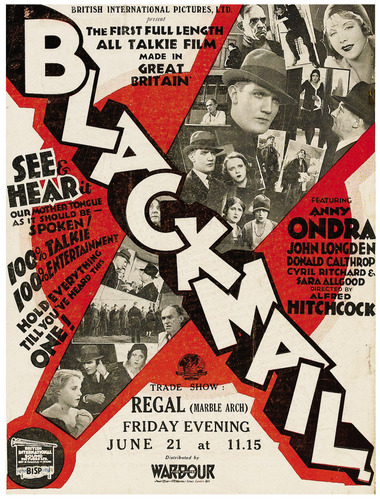
Rarely seen (and more the pity) as this entirely silent film of Hitchcock’s more famous, semi-talkie version is a stand-alone piece itself, seen to be of better quality.

Blackmail is undoubtedly a visual binge for the eyes, one they will drink in heartily, happily suffering a celluloid hangover. The feats accomplished here are more surprising when one considers that at this time in cinema the silent camera was only just experiencing the dizzying liberation from its usually static confines. Directors such as Hitchcock, Eisenstein and Murnau were now fully confident in utilising all aspects of the art form from acting to camerawork and editing to result in the most thrilling motion pictures.

Here, Hitchcock almost knocks the viewer out with an audacious series of shots and techniques:

His frequent and innovative use of mobile camera as he swings his camera from one character to another, jumps into a ringing phone and also tracks his actors as they walk around the sets.

He performs an immaculately staged craning shot, swiftly following Ondra and Ritchard as they ascend four floors of a Chelsea townhouse with elevator smoothness. Camera wise, Blackmail outclasses most other films of this period, if not all of them.

Hitchcock had already started developing his very own mise en scene in his earlier films’ and would continue to develop this throughout his career, tickling film critics and theorists the world over, as they look ever deeper for psychosexual meanings behind ‘The Master’s’ images.

There are the visual motifs (the outstretched hands of various characters mimics the hand of the murder victim, as if he taunts Ondra from beyond the grave), the car wheels that whirl around, giving chase to not only a criminal at the film’s opening but then Ondra and her complicit lover thereafter.

There are the visual jokes of course. As Ondra walks home from committing her double sins, the sign on a theatre notes the play is a comedy; an advertisement billboard extols the virtues of a gin that is “white as purity”. Hitchcock’s trademark appearance before the camera is as a commuter harassed by a little boy on the underground.

There is also a juicy humour interspersed throughout; when Ondra comes to the police station, ostensibly to ‘fess up, the policeman is incredulous that this could see “women detectives in the yard”, the obvious anachronism not being lost on an appreciative audience.

The technical details of how the sound and silent versions cross-over and how the films came to be made in such a manner could fill a whole other review, but suffice to say contrary to legend, Hitchcock almost certainly planned Blackmail from the outset as finishing at least a part talkie. But the dual production style helped both films contrast and also complement each other in the end.

Ondra, despite her notoriety these days as one of the most unfortunate casualties of the sound transfer (her Polish accent, deemed impenetrable for British audiences, meant she mouthed her lines for the sound version whilst actress Joan Barry spoke hers from nearby on set) turns in a delicate, tortured performance as a flighty girl caught in an escalation of Hitchcockian coincidence. She also displays one the finest pairs of legs in the movies.

Allgood, playing her devoted mother who nags incessantly about doing the cleaning whilst her murderess daughter is being conned in the parlor, would go onto a successful career in Hollywood that ultimately saw her nominated for a Best Supporting Actress Oscar for How Green Was My Valley (1944).